

Cycle 2 Week 21 Tutor Ideas for Classical Homeschooling
It is Cycle 2 Week 21 and I can hardly believe we are down to the final four weeks of the year. The kids have come so far since Week 1. You can see their confidence, their curiosity, and their joy in learning growing each week. At this point in the cycle everything starts to click and it is such a gift to watch them make connections across subjects with greater ease.
This week’s plans keep that momentum going with simple and hands on activities that help the memory work feel fun and accessible. My goal is always to support a peaceful and playful classroom where young learners feel encouraged rather than overwhelmed.
As always I am not affiliated with any Classical education organization. I am simply sharing what has worked beautifully in my own classroom with little ones. I hope these Cycle 2 Week 21 tutor ideas give you fresh inspiration and help you finish out the year strong.
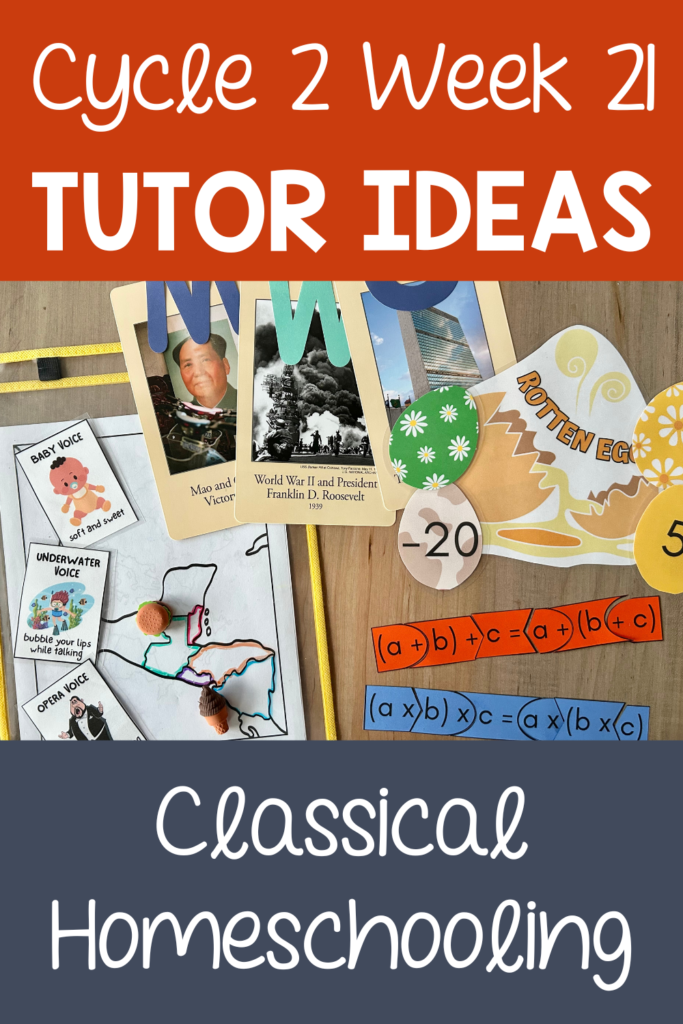
We love being part of our Classical homeschooling community. Read more about how God redirected our path from private education to homeschooling and Classical education here.
This post contains affiliate links, which means I make a small commission at no extra cost to you. See my full disclosure here.
Are you new to the Classical model and want to know more about it? Keep reading below about how it’s organized, the different cycles, our community time, and MORE!
If you already know about the Classical homeschooling model and you are ready to jump to the actual tutor ideas, click HERE.
A Classical model of homeschooling
We are part of a Christ-centered homeschool program that follows the Classical model. The younger children, ages 4-12, focus on a memorization-based curriculum which acts as the groundwork of learning that is built upon in later years.
Children and their parents learn key facts across the core subject areas including history, science, English, mathematics, geography, and Latin. Tutors use fun activities, games, songs, and lots of energy to introduce the new material. The parents can then expand on that material at home throughout the week.
Cycle rotation
The material is divided into three cycles, which each last one year. The cycles continue to rotate every three years, so most children who start when they are kindergarten age, complete each cycle at least twice. This allows them to develop a deeper comprehension and grasp of the material through repetition.
Cycle 2 material
This year in Cycle 2, we’re learning about pre-Reformation to modern history, ecology, astronomy, and physics; Latin verb endings; English pronouns, adverbs, and conjunctions; skip counting, conversions, and more!
The following ideas are what I’m planning to do with the group of kids I am tutoring this year (ages 4-6). You may use these ideas if you are also tutoring in a Classical homeschooling community, or if you’re a parent who is looking for memory work ideas to use at home.
Also, you don’t have to be part of any particular Classical homeschooling group to use these ideas! These are ideas to help children learn key concepts in the core subject areas. If you are a homeschooling parent, or just a parent who wants to supplement what your kids are currently learning in school, these ideas will be helpful for you.
Community group time
Our homeschooling community has been meeting on Tuesdays. Our leader starts off the morning with everyone together in a big group setting. She typically begins that time with a devotional reading and prayer, and then continues with some announcements, celebrating birthdays, the pledge of allegiance, and anything else she wants to cover with everyone.
After this time, we split off into our different groups based on age. The tutors lead their groups into different classrooms and begin the New Grammar part of the day. This is when the tutor introduces the memory work for each core subject. Check out my post and video about how to make your own tutor board!
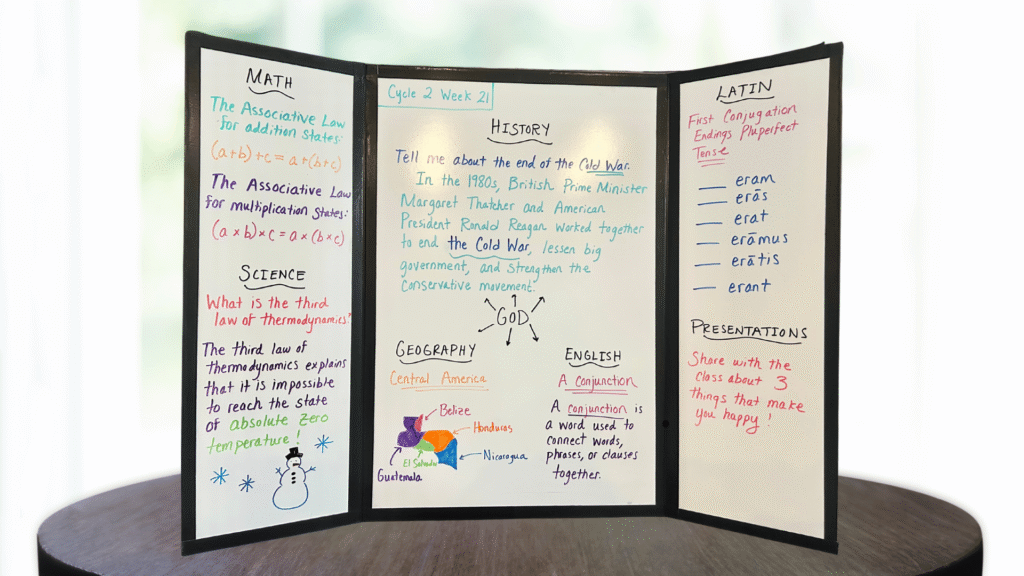
Cycle 2 Week 21 Tutor and Memory Work Ideas
New Grammar
Geography – Central America
This week in geography, we’re learning about Central America: Guatemala, Belize, El Salvador, Honduras, and Nicaragua.
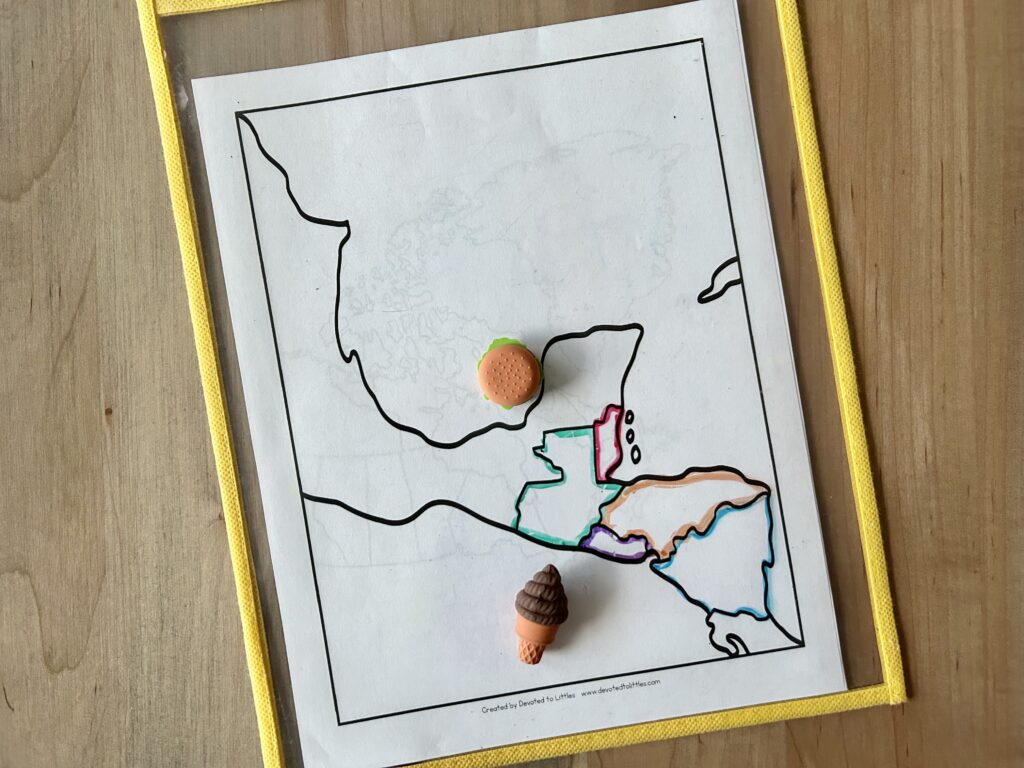
During the week before community day, I prepare these Central America maps. These maps show the region clearly, so I use them instead of the standard trivium table maps for this week. You can print the maps and slip them into a dry erase pocket sleeve or laminate them. (This is the printer and laminator I use all the time!) I highlight each country we are learning in a different color dry erase marker.
Each child gets a prepared Central America map, and I tell them that we are going on a fun food tour through these countries! They each get a food eraser, and they point to each location as I tell the story.
We start out in Guatemala where we enjoy some tasty guacamole. Then we hop into Belize and stop for a snack of string cheese. Next we travel to El Salvador and enjoy a warm s’more. After that we head into Honduras for some sweet churros. By now we are SO full, so we end our trip in Nicaragua, where we rest by the lake because it is naptime!
I teach the children a song to the tune of Hickory Dickory Dock to help them learn these places.
As we sing the song together several times, I have the children point to each country as they sing it. Then I ask, “Let’s find the place where we ate churros. Who remembers that country? Now let’s find where we took our nap. What was that place called?”
If time allows, I give the kids a few different dry erase markers and let them lightly color in other places we have learned so far this year. If you need to move on, you can skip this part.
I have found that it works really well to review geography while we are working on geography. Since the maps are right in front of them, it is easy to talk about places from previous weeks as we go.
English – A Conjunction
This week in English we’re learning the definition of a conjunction: A conjunction is a word used to connect words, phrases, or clauses together.
We’ll sing a song to the tune of I’ve Been Working on the Railroad, and each time we sing the word “connect,” I will have the children gently link arms with a friend. Once they link arms, they will stay connected until the end of the song. This simple motion helps them remember that conjunctions join things together just like their linked arms.
This song also includes next week’s coordinating conjunctions, but we will just sing the first part of the song this week.
We will sing the song a few times, and each round I will encourage the children to link arms with someone new. It is a sweet, visual way to reinforce the idea that conjunctions connect important pieces of a sentence.
Timeline
The timeline stays the same each cycle, and this week we continue with the next seven cards.
I often use these Timeline Cards in class: Set 1 (Ancient World), Set 2 (Medieval World), Set 3 (New World), and Set 4 (Modern World) I highly recommend investing in them (you should get all four sets) whether you are a tutor or a parent. I consistently use them as a tutor and also at home with my kids.

Since I have the 4-6 year old children, I like to tape the paper letter that the timeline event starts with at the top of the card. I have found these letters at my local Dollar Tree. Some of the children in my class can’t read yet, so this helps them identify the event I’m referring to.

Cycle 2 Week 21 Timeline
After we sing, we play one of the class’s favorite games. I choose one child to step outside the room with a parent volunteer while the rest of the children hide the first timeline card somewhere in the classroom. I remind them that we will help the child find the card by singing this week’s timeline section louder if they are close to the hidden card and quieter if they are far away.
Once the card is hidden, the child comes back into the room and begins searching. We sing louder and quieter as clues until they discover the card. When they find it, they place it on the wall with painters tape in the correct spot.


Then another child takes a turn going outside, and we repeat the process for each of this week’s timeline cards. The children absolutely love this activity. It allows them to hear this week’s timeline several times and keeps them joyfully engaged the entire time.
Math
This week in math we are learning the Associative Law for addition and multiplication. During the week, I prepare two simple puzzles for each child: one that shows the associative law for addition and one that shows it for multiplication. I print the two puzzles on different colored paper so the pieces do not get mixed up. After printing, I cut out the pieces and place both puzzles into a small plastic bag for each child.

When it is time for math, I start by showing the children the associative law on my tutor board and teaching them a song to the tune of Do Lord. You can find my video below:
After we sing the song once or twice, I hand out the plastic bags with the puzzle pieces. As we continue singing together, I encourage the children to put both puzzles together. This gives them a hands on way to see how grouping numbers does not change the answer. It is a simple and fun activity that makes the associative law much easier for them to understand.
History
This week we learn about important leaders who helped bring the Cold War to an end. I start by singing the history sentence once normally and tell the children to listen very carefully. See my tutor video for this tune! Then I sing it again, but this time I add some silly words. Whenever the children hear a silly word, they raise their hand and tell me what the correct word should be.
Here is the correct version of this week’s history sentence:
In the 1980s, British Prime Minister Margaret Thatcher and American President Ronald Reagan worked together to end the Cold War, lessen big government, and strengthen the conservative movement.
Here is the version with silly words:
In the 1980s, British Prime Minister Muffin Thatcher and American President Ronald Raisin worked together to end the Cold Warthog, lesson pig government, and strengthen the candy movement.
Each time I say a silly word and the children catch it, I let them correct me. Then I start the history sentence again from the beginning, saying everything correctly until I reach the next silly word. This way the children hear the correct history sentence many times, but the silly words keep it fun and keep their attention.
We repeat the process until all the silly words have been corrected and the entire history sentence has been spoken correctly several times. The kids always love this activity, and it really helps the sentence stick!
Science: The Third Law of Thermodynamics
This week in science, we’re learning about the third law of thermodynamics — explains that it is impossible to reach the state of absolute zero temperature.
We’ll keep singing our science song to the tune of I’ve Been Working on the Railroad, since it’s catchy, easy for little ones, and includes the last two weeks’ laws as well.
This week, I will teach the children a new motion to go with this week’s vocabulary:
ZERO TEMPERATURE — lay down on the ground
Before we sing, we review all the motions we have learned so far and add our new one for this week:
CREATED — open both hands wide like you are making something appear
DESTROYED — gently swipe your hands downward like something is disappearing
HIGHER TEMPERATURE — reach both hands up high
LOWER TEMPERATURE — crouch down low
ZERO TEMPERATURE — lay down on the ground
Once the children know all the motions, we begin singing the science song together. When we sing “created,” everyone opens their hands wide; when we sing “destroyed,” everyone swipes downward. For “higher temperature,” they stretch tall; for “lower temperature,” they crouch low; and for “zero temperature,” they lay down on the ground.
These simple movements help anchor each vocabulary word and give the children a physical picture of what we are learning. We will sing through the song a few times.
Latin
This week in Latin learning the first conjugation verb endings in the pluperfect tense:
eram, erās, erat, erāmus, erātis, erant.
See my tutor video for the tune we use to sing these! Before we begin, I write the endings clearly on my tutor board and review them with the children.
Then we turn it into a fun movement activity. I ask the children to help me choose one ending to circle. For example, we might circle “eram.” We all begin sitting in our chairs and sing through the endings. When we sing the circled ending (“eram”), everyone stands up and stays standing until we say it again.
After we sing through the song once, I ask the children to choose another ending to circle. Maybe this time they pick “erat.” We all sit back down and start again. Now, whenever we sing eram or erat, we switch positions (either sitting or standing).
We continue adding circled endings one by one until all six have been chosen. By the end, we sing the verb endings while sitting, standing, sitting, standing—every time a new ending appears! It gets a little silly, but the kids absolutely love it, and it helps them hear the pluperfect endings many times in a memorable way.
Another option I like to do for Latin, is use these silly voice cards (linked here). We switch off singing the noun endings in the different silly voices. This always gets lots of laughs and helps keep their attention, especially as the day goes on.
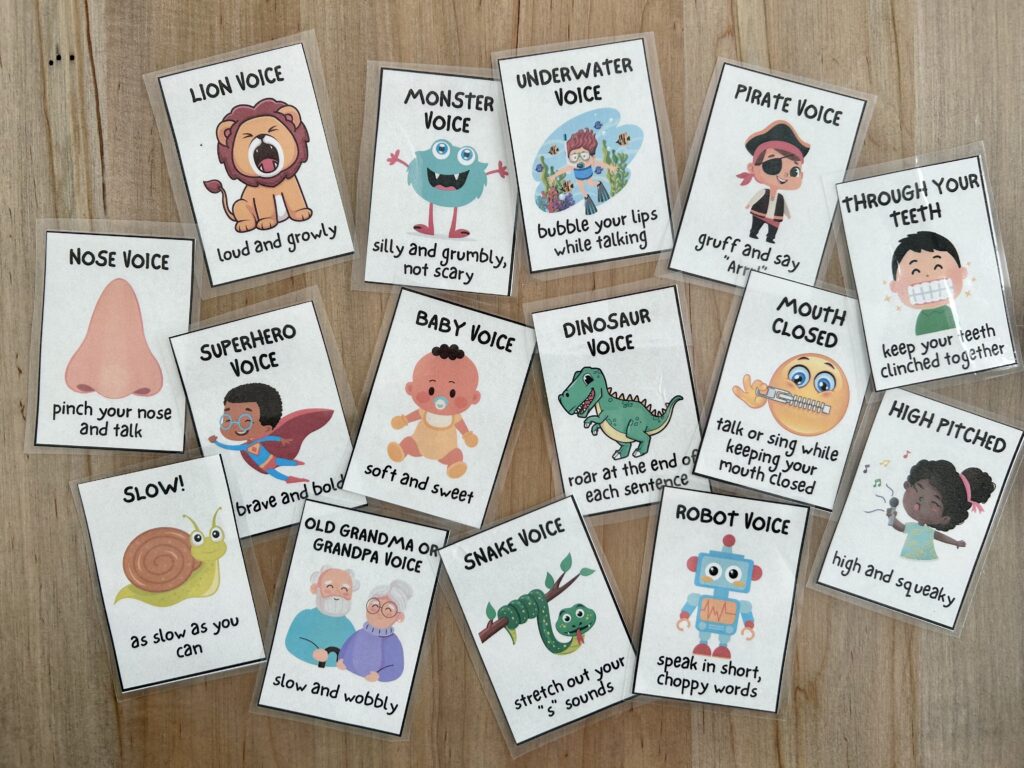
You can download my UPDATED printable Silly Voice and Action Cards for free by entering your email in the form below and I’ll send them straight to your mailbox!
Review
For review this week, we play a game called Rotten Egg. This is a fun Easter review game, similar to the Stinky Feet and Lovebug review games we played during previous weeks. We played this game last week and the kids loved it so I decided to pull it out again!

Before community group, I cut out and laminate this Rotten Egg sign and egg cards. You can download these for free! You can also just draw a rotten egg on a white board and use sticky notes as the Easter eggs if you don’t want to print anything out.
The egg cards have either a positive number on the back or a negative number with a bug. The numbers are from -2o to +20 in increments of 5.
I split my class into teams. I ask the first child a review question from any subject and after they answer they get to pick an egg card off of the board. If they don’t know the correct answer, I let the rest of their team help. They turn the card over and see it’s a “rotten egg” card or not. A “rotten egg” card is a negative number with a rotten brown color.
Whatever point value is on the back of the card gets added or subtracted from the team’s score.
The game ends when all the egg cards are gone! Whichever team ends up with the most points wins! Or you could switch it up and have the team with the least points win.
I prefer to ask review questions on the fly instead of preparing them ahead of time. Here are some more example questions I ask (remember I have the youngest children in my group):
- Can you name one of the countries in World War I?
- What do you remember about the Industrial Revolution?
- Who remembers one of the states of matter?
- What is one purpose of a sentence?
- What is one form of energy?
The game ends when all the heart cards are gone! Whichever team ends up with the most points wins! Or you could switch it up and have the team with the least points win.
Composers and Orchestra in Fine Arts
Now that we’re in the final stretch of Cycle 2, Fine Arts shifts to Composers and Orchestra, and it’s such a peaceful and beautiful way to end the year. Over six weeks, the children are introduced to great composers, learn to recognize the four instrument families, and begin to hear the unique styles that make each composer memorable.

In our community, this time is simple and engaging—one composer at a time, a featured piece to listen to, a few meaningful takeaways about their life and music, and hands-on ways to connect what they’re hearing to real instruments.
If you’d like to see exactly how we structure these weeks (both in community and at home), I’ve shared all the details in this post, along with resources that make planning easy. I also share:
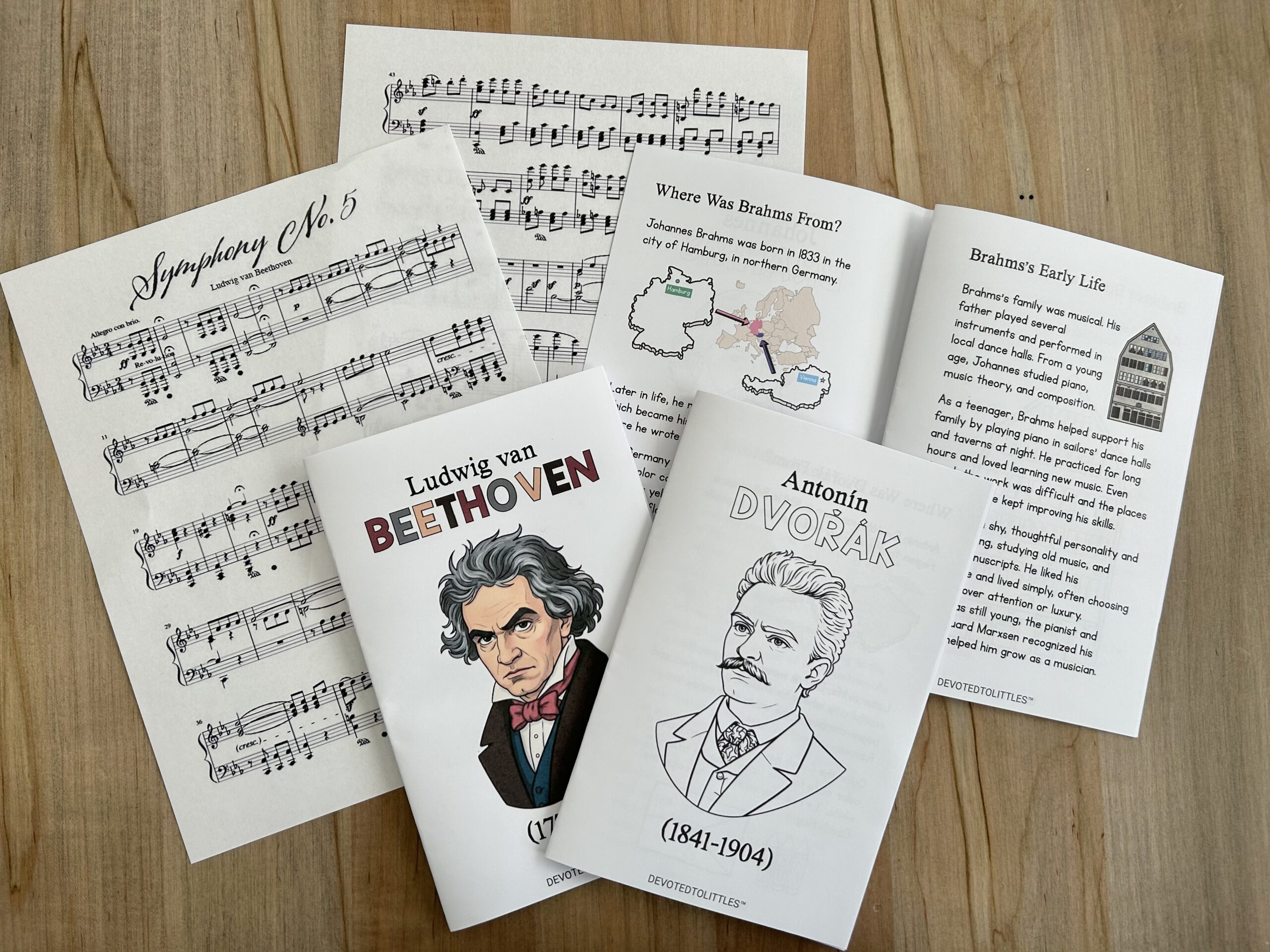
✨ Three Great Composers Mini Books – Beethoven, Brahms, and Dvořák
Each 11-page mini book introduces one composer with short, kid-friendly text, listening prompts, and interactive pages that help children connect to the music in a personal way. They’re perfect for morning basket time, quiet table work, or reinforcing what your child learned on community day.
✨ Instruments of the Orchestra Activity Book
With 38 hands-on activities, this book walks children through the four instrument families—strings, woodwinds, brass, and percussion—helping them recognize instruments, understand their sounds, and see how they fit together in the orchestra.

✨ Instruments of the Orchestra UNO Card Game
This fun, family-style card game turns instrument review into an exciting kitchen-table activity. Kids practice recognizing instruments and families while playing a game they already love.

✨ FREE Instrument Family Posters
A bright, kid-friendly set of four printable posters featuring the strings, woodwinds, brass, and percussion families. They’re perfect for hanging in your homeschool space or keeping nearby during music study to reinforce what children are hearing and learning.

Together, these tools make composer study and orchestra appreciation engaging, memorable, and easy to weave into your week. 🎶
Cycle 2 Weeks 13-24 Review Activity Book
I’m excited to share with you about my new Weeks 13-24 Review Activity Book! I designed it to help kids review, connect, and celebrate everything they’ve learned in the second half of Cycle 2 — from geography and history to science, math, Latin, English, and even the timeline.

Inside, you’ll find 50 engaging activities that make review time interactive and joyful. Each page reinforces memory work while encouraging deeper connections and confidence. Whether you use it during a mid-cycle break, after you complete cycle 2, or as part of your regular review time, it’s an easy, low-prep way to keep learning fresh and fun.
You can find the Cycle 2 Weeks 13-24 Review Activity Book in my shop below! I also have a Cycle 2 Weeks 1-12 Review Activity book that review the material from the first have of Cycle 2.

Cycle 2 Historyopoly
One of our favorite ways to review history is with Cycle 2 Historyopoly, a brand new game I created this year.

It is modeled after Monopoly but uses all of the Cycle 2 history sentences. The kids love rolling dice, moving around the board, and reviewing history facts as we play. It turns review into something exciting and fresh, and we will definitely be pulling it out again many more times this year. You can grab this NEW game below!

Cycle 2 Memory Work Activity Book
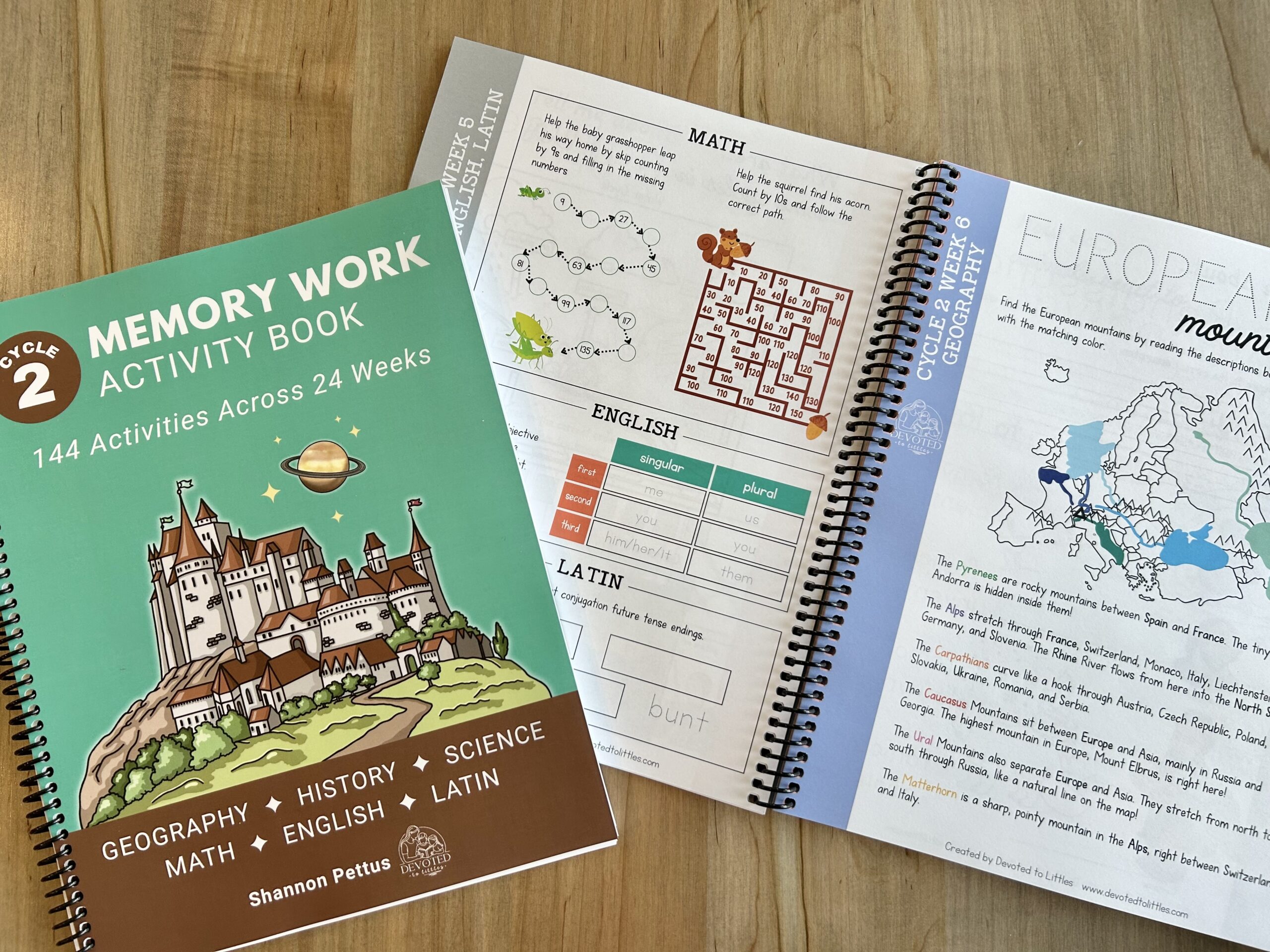
If you’re looking for a fun way to review the memory work at home with your kids this year, check out our NEW Cycle 2 Memory Work Activity Book. I created this notebook to give kids a fun way to practice their memory work, without adding extra prep for mom, dad, or grandma.
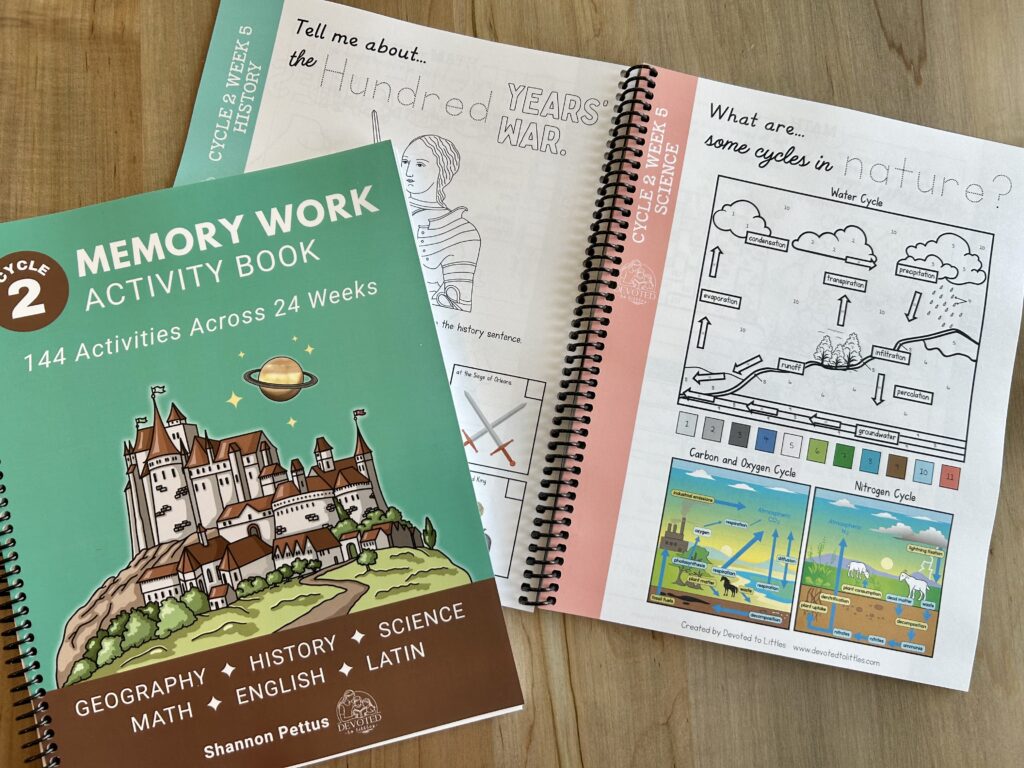
Inside, there’s one short activity for each subject for all 24 weeks of Cycle 2. When we do geography on Monday, they do the geography activity for that week. When we get to Thursday, they do the science page. It’s so easy to match to whatever we’re focusing on that day.
I love that it keeps things simple and fun. It’s NOW available in digital and printed form, and there is a sample page you can take a peek at if you would like too! Check it out below!
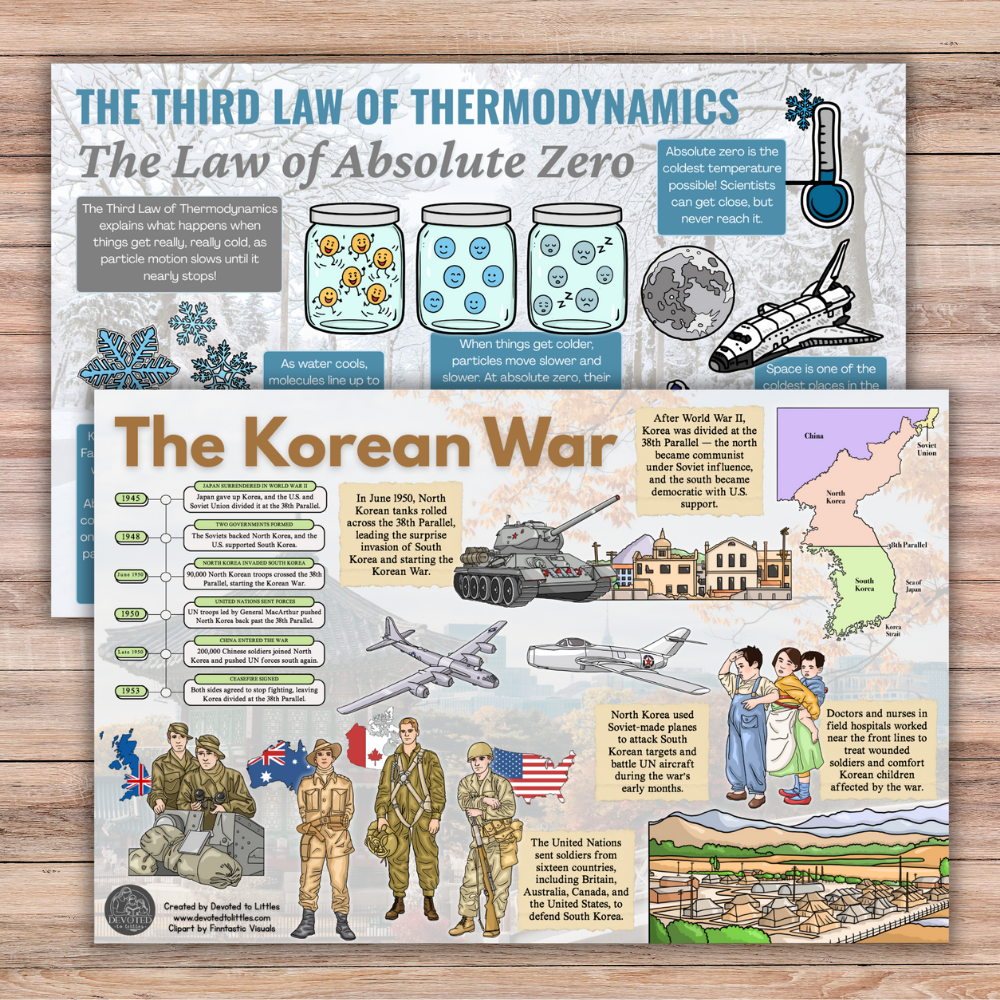
Cycle 2 History and Science Placemats
These brand-new Cycle 2 History and Science Placemats are designed to make memory work fun and interactive for kids, whether you’re using them alongside Classical Conversations or on their own as a way to dive deeper into history and science.
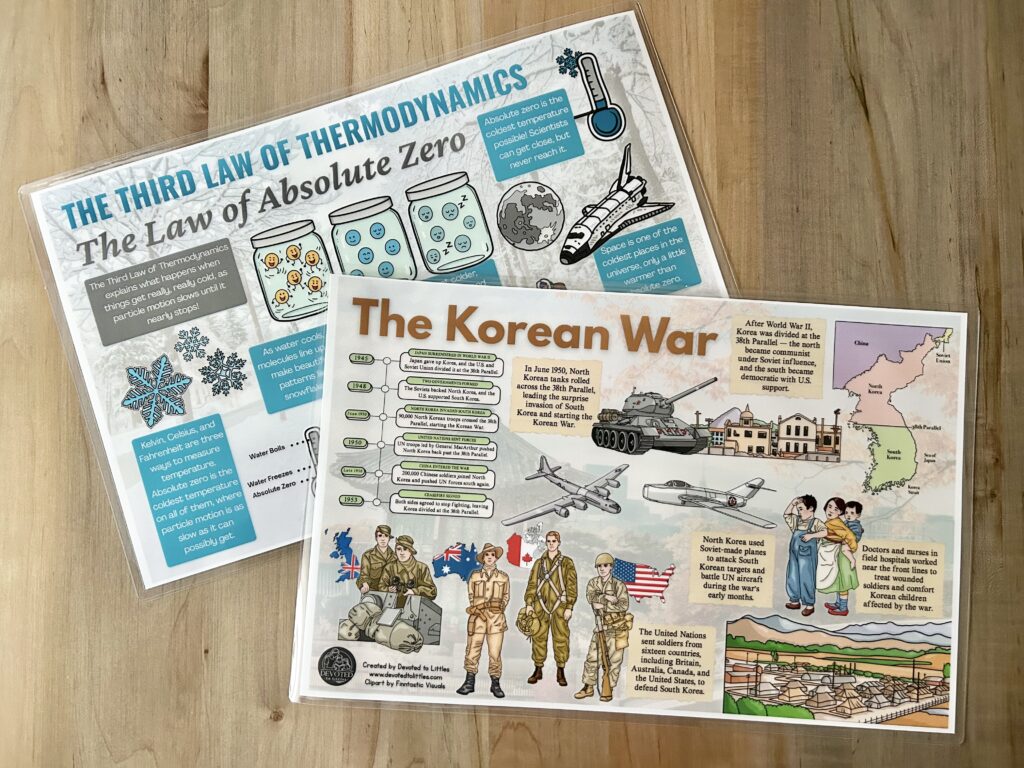
Each placemat is filled with colorful visuals and simple explanations that bring the topics to life. Just print, laminate, and use them again and again during meals and review time. They’re an easy, no-prep way to dive deeper into the history and science topics with your kids. Get your set for Weeks 19-24 below. The other three quarters are also available HERE!
Cycle 2 Geography Passport
We also have a fun addition for geography review — the Cycle 2 Geography Passport! Whether you’re a tutor or a homeschool parent, this printable resource helps kids track their Classical Conversations Cycle 2 geography week by week with full-color maps and matching cut-and-glue stamps.
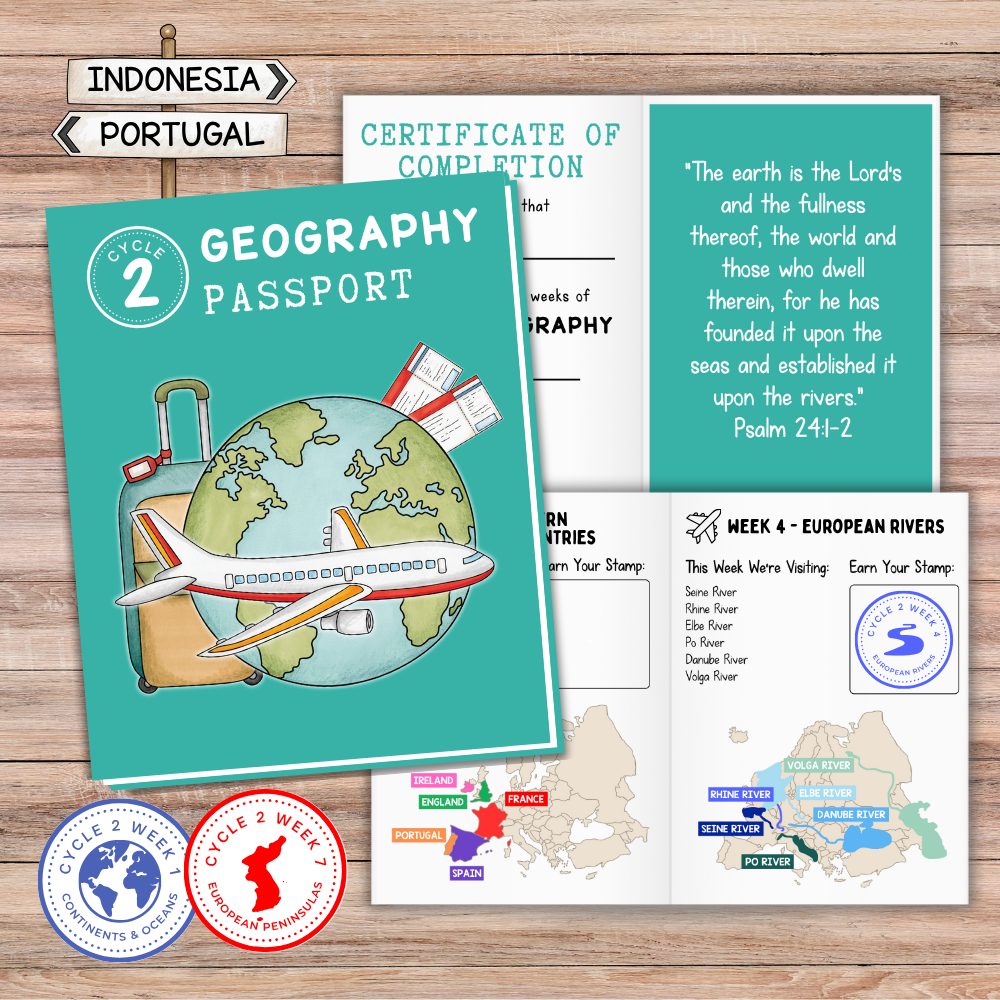
Each page highlights that week’s memory work with clearly labeled locations, making it easy for young learners to connect what they’re memorizing with what they see on the map. Kids love collecting stamps as they “travel” through the world. You can also print these stamps on these sticky circular labels which makes it even more fun!
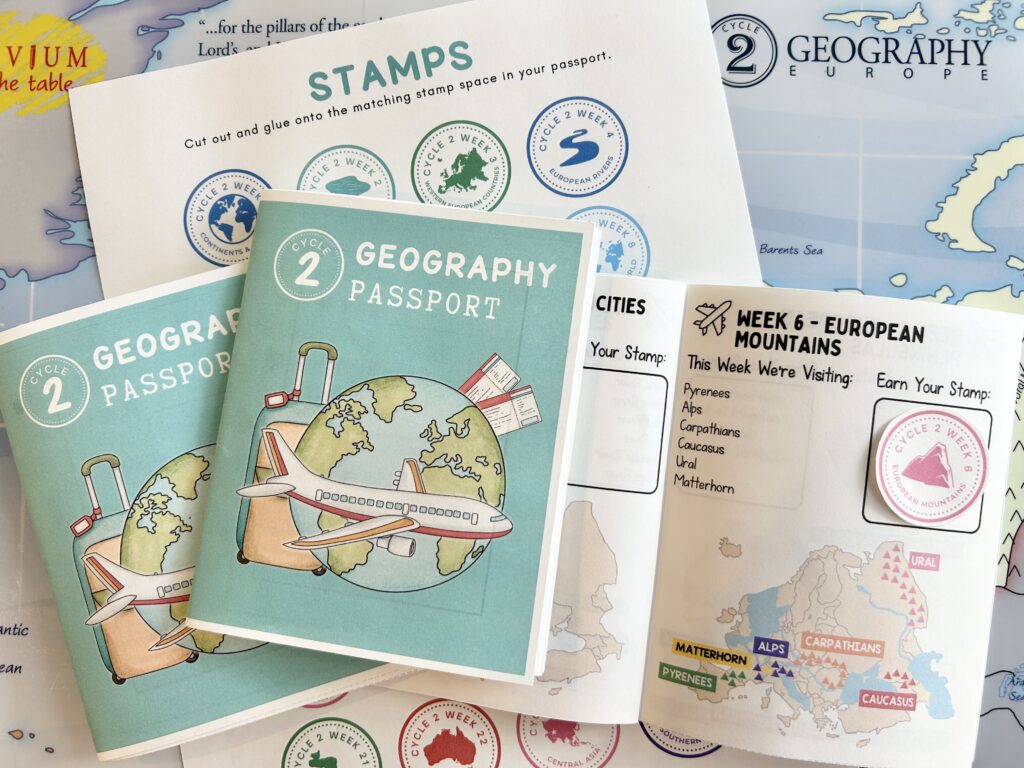
You can use the Geography Passport at home with your own children, or print it out for use in class. A group license option is available if you’d like to use it with your tutoring class or community group.
It pairs perfectly with the Cycle 2 Memory Work Activity Book, giving your students or children a hands-on, engaging way to practice their memory work all year long. If you’d like both resources, be sure to check out the bundle option available in my shop!
Memory Work Meadowland
Another one of our favorite ways to review is with fun, themed board games. I created a set of Candyland-style games that make memory work review exciting and interactive for kids. These games can be used with any cycle and are a great way to practice all of the memory work subjects together.
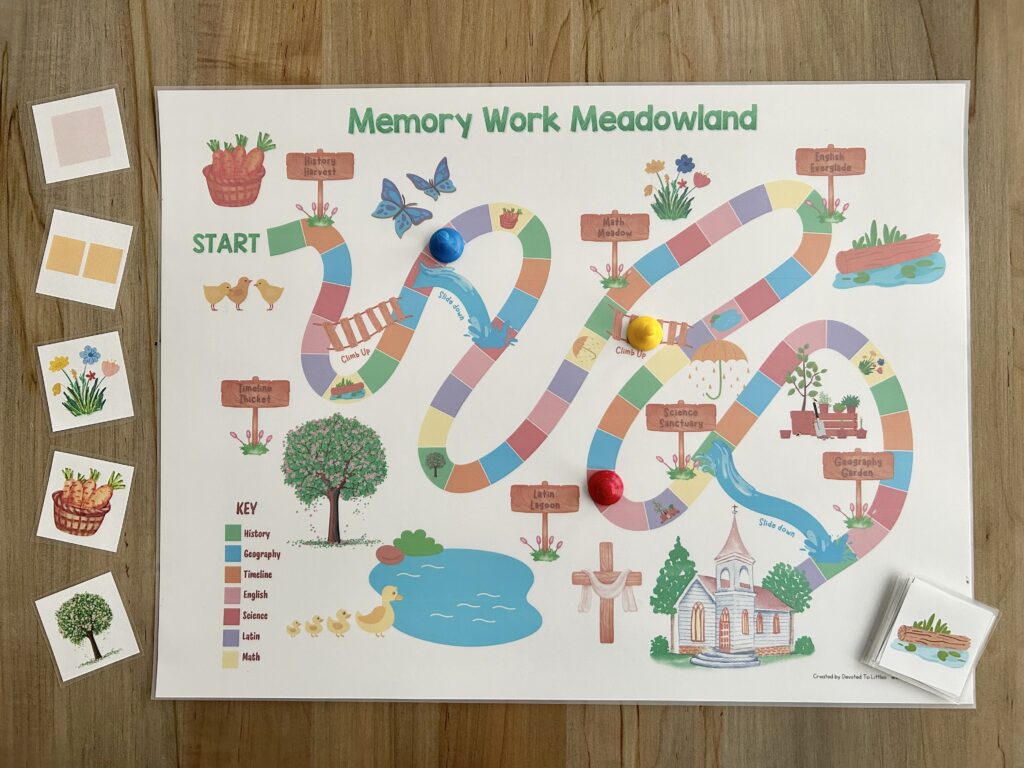
We’ve been playing Memory Work Meadowland, a Spring/Easter-themed review game. It works just like Candyland, but with the addition of memory work review built in. Players move along the board by drawing cards with color blocks or picture spaces. Then they answer a review question that matches the space they land on. Correct answers let them stay put, but if they miss, they move back. The game also includes fun twists with slides and ladders to keep things lively. The first player to reach the church wins!
The best part is that I now have a fall version, a winter version, and a spring version, so you can rotate them throughout the school year. You can grab each one individually, or get the seasonal bundle with all three at a special price.
These games have been such a hit in our home. They are perfect for community review days, family game nights, or just a fun way to end your homeschool week. You can find them all in my shop below.
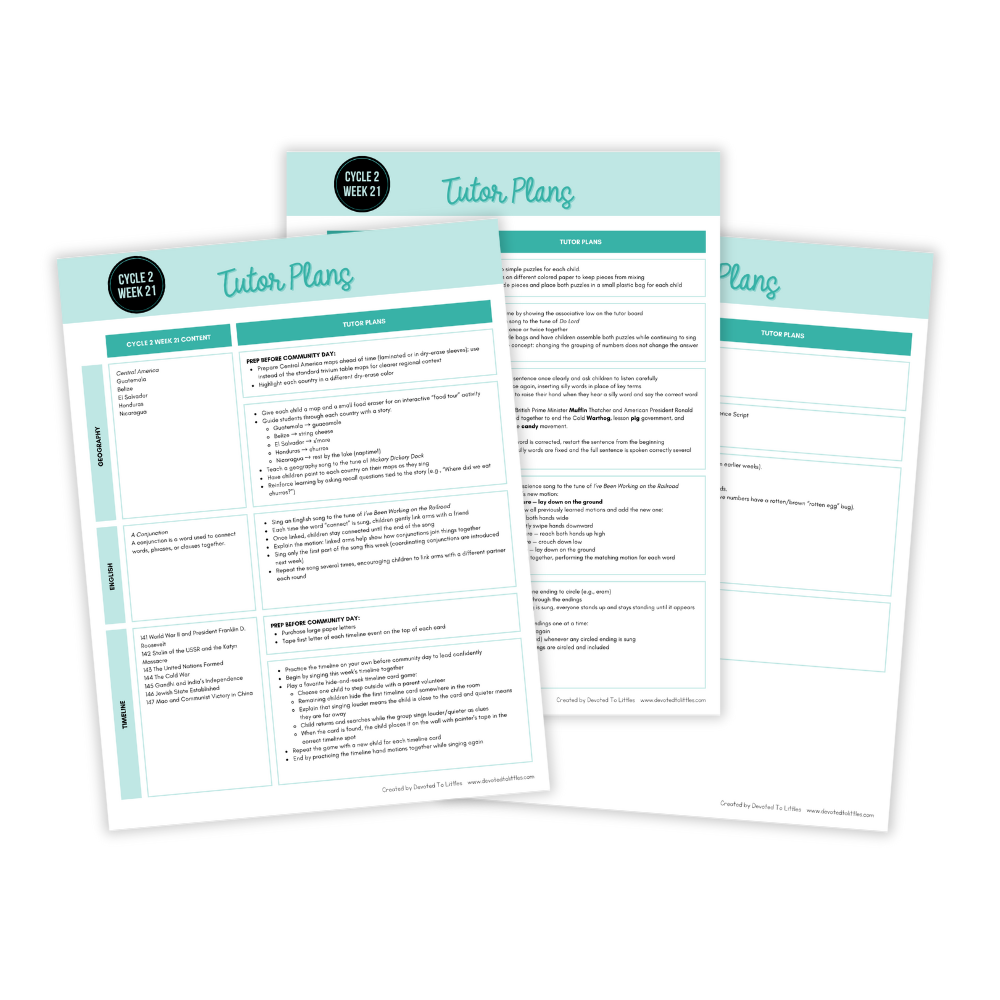
Printable and Editable Cycle 2 Week 21 Tutor Plans
Here is a printable EDITABLE template of these Cycle 2 Week 21 Tutor Plans. Here is a blank template too! If you want the plans as they are, here is a PDF version (filled out) and a PDF version (blank).
Cycle 2 Week 21 Memory Work Games
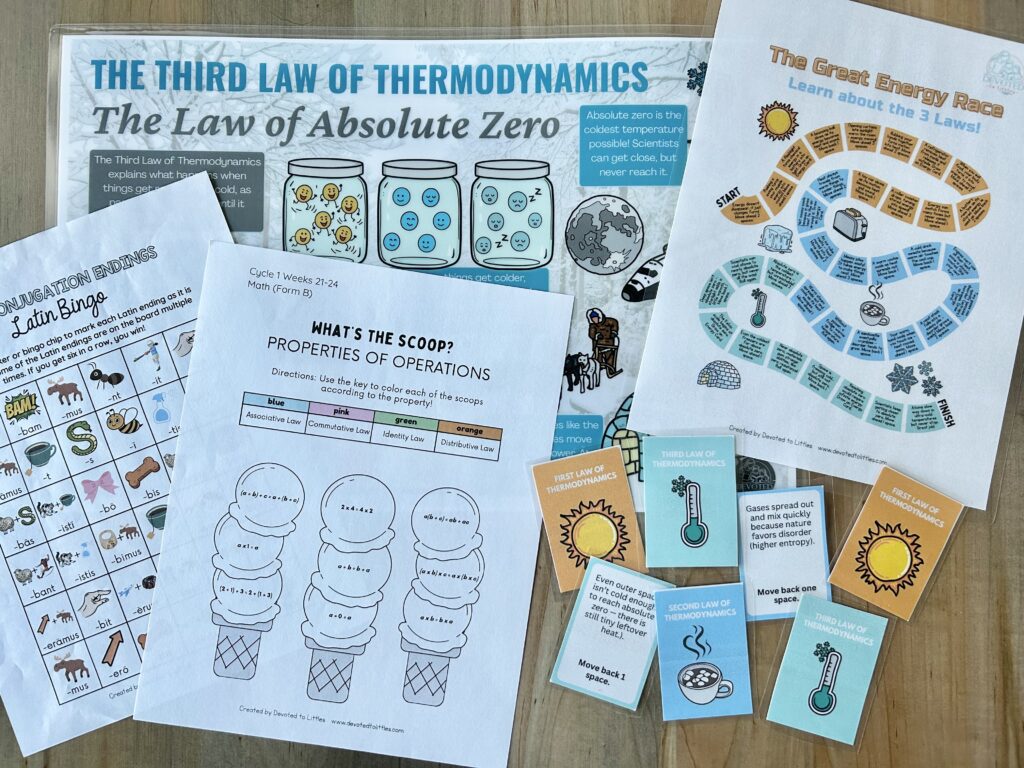
Also check out the FREE activities and games that you can use at home to help your kids practice the memory work this week.
I hope this helps give you some ideas and songs to use whether you are a tutor or a parent. Please comment below if you have any questions about anything.
Blessings to you on this homeschooling journey!


Where can I find the orchestra game?
You can find all the orchestra resources in this post! https://devotedtolittles.com/homeschool-music-fun-composer-activities-orchestra-games/