
Cycle 3 Classical Conversations Picture Booklist (By Week!)
Looking for the perfect Classical Conversations Cycle 3 picture books to read with your children? You’re in the right place! This booklist is packed with engaging read-alouds that connect beautifully to each week of Cycle 3.
Reading good books with my children is one of my favorite parts of homeschooling. It’s a fun and meaningful way for them to learn about fascinating topics! These books are just the right length to keep my 7-year-old engaged, while also delighting her younger siblings.
I list each book only once in this booklist, but many of them align with the memory work for multiple weeks. Check if your library has them and enjoy reading them with your children throughout the weeks they apply!
This post contains affiliate links, which means I make a small commission at no extra cost to you. See my full disclosure here.
Overall Cycle 3 Books for Every Week:

Draw the USA (Draw the World) by Kristin J. Draeger (Cycle 3 Geography)
This fun workbook walks kids through drawing each U.S. state step-by-step, building the whole map as they go. With a little practice, they’ll be able to sketch the USA from memory! It’s a great hands-on way to reinforce Cycle 3 geography memory work, and kids love the confidence they get from actually drawing the states themselves.

Draw Write Now Book Five: The United States, From Sea to Sea, Moving Forward by Marie Hablitzel and Kim Stitzer (Cycle 3 Geography)
This book takes kids on a drawing and handwriting tour of U.S. history and geography! Lessons cover topics like the flag, railroads, waterways, the Louisiana territory, and more. It’s a fun way to weave drawing and writing practice into your geography and history studies all throughout the cycle. A great all around resource for Cycle 3!

The Magic School Bus Presents: The Human Body by Dan Green (Cycle 3 Science)
This nonfiction companion to the original Magic School Bus series is one of those books you’ll want on the shelf all cycle long! It’s packed with incredible photographs and illustrations covering all the major body systems, from bones and muscles to the heart, lungs, and digestive system. Ms. Frizzle and the gang pop in throughout to add their fun commentary. This doesn’t tie to just one week because it covers everything we study in our Cycle 3 science memory work about the human body. Pull it out during Week 1 when we start learning about tissue, flip to the skeleton section during Week 2, and keep going all the way through. It’s a fantastic reference book for the whole first half of the cycle!

Passport to America: Your A to Z Tour of the States by Craig Froman (Cycle 3 Geography)
This is such a fun one to flip through together! Kids get to “travel” through all 50 states, learning about each state’s flag, motto, and fascinating facts along the way. It’s packed with interesting tidbits about history, geography, and what makes each state unique. My kids love the “Did You Know” facts scattered throughout. It’s the kind of book they want to keep coming back to. A great complement to Cycle 3 U.S. geography memory work!

America: A Patriotic Primer by Lynne Cheney (Cycle 3 History) This one is so much more than just an alphabet book! Each letter stands for an important idea or person in American history, like “J is for Jefferson” and “S is for Suffrage.” The illustrations are beautiful and packed with fun details, quotes, and facts that kids love discovering. It’s a wonderful read aloud that sparks great conversations about what makes America unique. Perfect for tying into Cycle 3 American history memory work!

If You Want a Friend in Washington: Wacky, Wild & Wonderful Presidential Pets by Erin McGill (Cycle 3 History) My kids absolutely get a kick out of this one! It’s all about the wild and wacky animals that have lived in the White House, from beloved presidential dogs to Calvin Coolidge’s hippo and Andrew Jackson’s foul mouthed parrot. The illustrations are so fun, and the repeating refrain throughout makes it a great read aloud. It’s a lighthearted way to learn about U.S. presidents and a perfect addition to Cycle 3 history!

Our 50 States: A Family Adventure Across America by Lynne Cheney and Robin Preiss Glasser (Cycle 3 Geography)
If your kids loved America: A Patriotic Primer, they’ll love this one too! It follows a family (and their dog!) on a road trip across all 50 states, packed with fun facts, landmarks, and famous people from each state along the way. The illustrations are beautifully detailed and my kids always find something new every time we read it. It’s a wonderful way to bring Cycle 3 U.S. geography to life and get kids excited about learning what makes each state special!

The Scrambled States of America by Laurie Keller (Cycle 3 Geography)
This one is a total crowd pleaser! The states get bored with their spots on the map and decide to swap places with each other. Of course, things don’t go so well when Kansas ends up in the middle of the ocean and Minnesota forgets sunscreen in Florida’s spot. My kids think it’s hilarious, and the silly illustrations are full of fun little details. It’s a great way to get kids familiar with the shapes and locations of the states while laughing the whole way through!
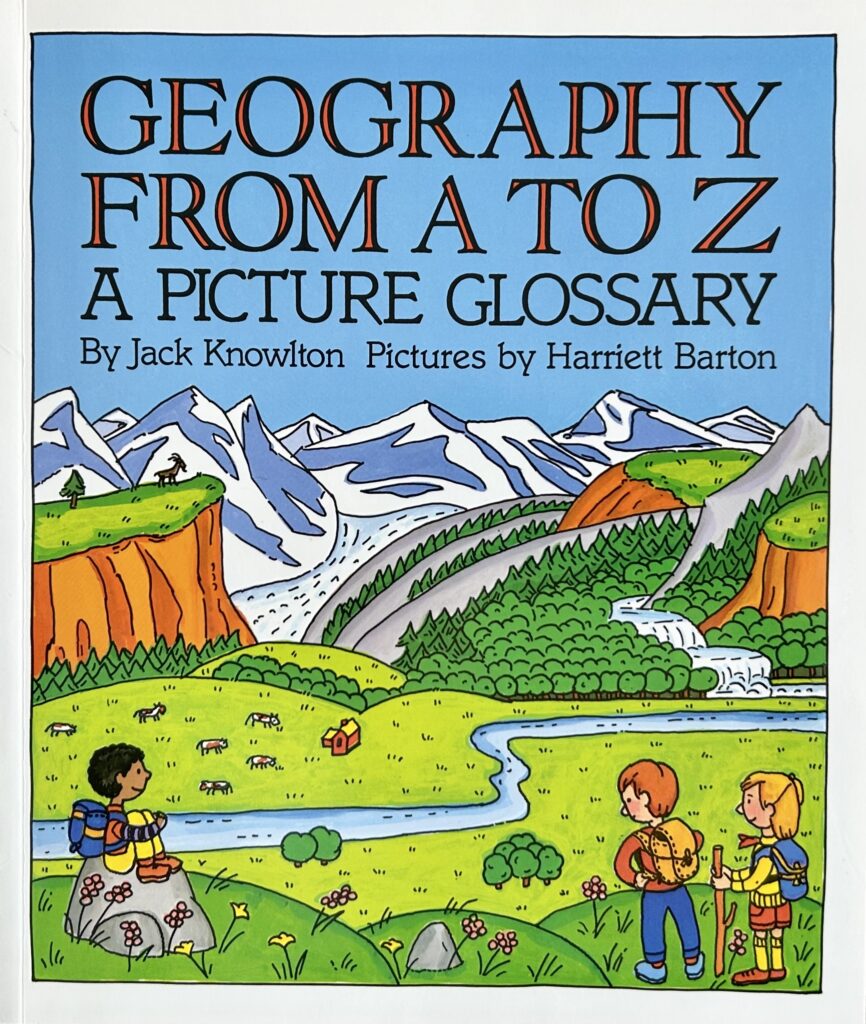
Geography from A to Z by Jack Knowlton (Cycle 2 Geography)
This beautifully illustrated book introduces over sixty geography terms in an easy-to-understand A-to-Z format. From archipelago to zone, children learn the meaning of landforms and features they see on maps and in nature. It’s a wonderful companion for geography for all the weeks!

Maps and Globes by Harriet Barton (Cycle 2 Geography)
This book gives young readers a clear and simple introduction to how maps and globes work, including directions, symbols, and how to find places around the world. It’s a great resource to kick of geography this year, helping children learn how to read and use maps to explore God’s world!
Here are our favorite picture books for Cycle 3 Week 1:

Draw Write Now Book Two: Christopher Columbus, Autumn Harvest, The Weather by Marie Hablitzel and Kim Stitzer (Cycle 3 Week 1 History)
This is a favorite in our homeschool! Each lesson pairs a step by step drawing with copywork, so kids practice handwriting while learning about Columbus’s journey, autumn harvest, and weather. It’s a wonderful hands on way to reinforce what they’re learning, and the lessons are short enough to fit into a busy day. A great companion to Week 1 history about Columbus!

Counting Our Way to Maine by Maggie Smith (Cycle 3 Week 1 Geography) This is such a sweet counting book! A family packs up and heads from the big city to the coast of Maine, counting everything along the way from 1 baby and 2 dogs all the way up to 20 fireflies on their last evening. The watercolor illustrations are full of charm and humor, and kids love spotting all the fun details on every page. This is a wonderful fit for Week 1 when we’re learning about states like Maine, New Hampshire, Massachusetts, Rhode Island, and Connecticut. It brings that Maine geography memory work to life in the most cozy, family friendly way!

A Picture Book of Christopher Columbus by David A. Adler (Cycle 3 Week 1 History)
This is a great simple biography that walks kids through the life of Christopher Columbus, from growing up in Genoa, Italy to his famous 1492 voyage funded by Queen Isabella and King Ferdinand of Spain. The illustrations are lovely, and the story is told in a way that’s easy for young listeners to follow. It also includes a map of his first voyage and a list of important dates in the back. A solid read aloud for introducing early American exploration during Cycle 3!
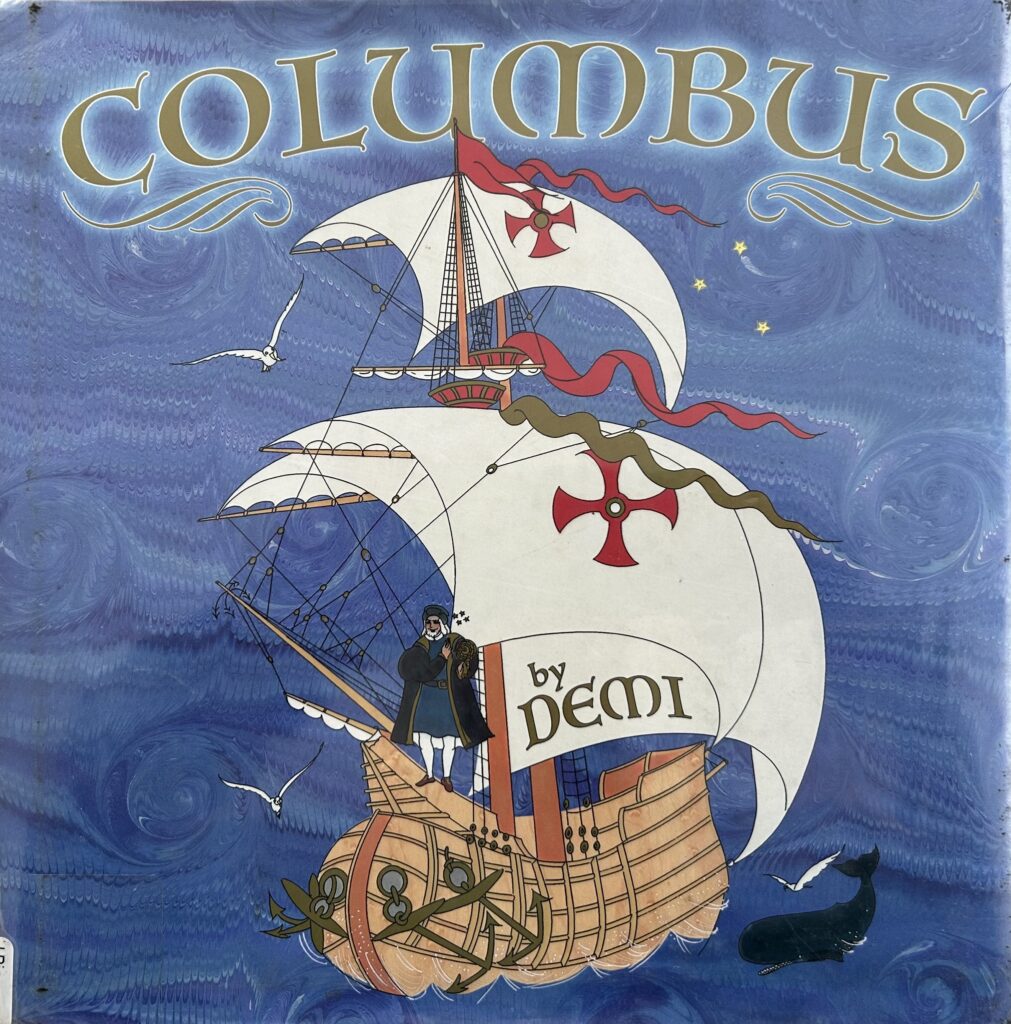
Columbus by Demi (Cycle 3 Week 1 History)
Demi’s artwork in this one is absolutely gorgeous, and the story gives a thorough look at the life of Christopher Columbus, from his early love of the sea to his four voyages to the Americas. What I appreciate about this book is that it doesn’t shy away from the full picture. It celebrates his accomplishments as an explorer while also honestly addressing the harm done to the native peoples he encountered. It’s a thoughtful read aloud for older kids and pairs well with Cycle 3 history discussions about early exploration!

Discovering a New World: Would You Sail With Columbus? by Elaine Landau (Cycle 3 Week 1 History)
Kids love this one because it puts them right in the middle of the action! It asks readers to imagine whether they would have sailed with Columbus into the unknown in 1492, and then shares what really happened. It’s part of the “What Would You Do?” series, which makes history feel exciting and personal. A fun way to get kids thinking and talking about early exploration during Cycle 3!

One Morning in Maine by Robert McCloskey (Cycle 3 Week 1 History)
This sweet book follows a little girl named Sal through a regular morning in coastal Maine. She loses a tooth, goes clam digging with her dad, and takes a boat ride to the mainland for ice cream. The charming illustrations bring small town New England life to life, and it’s the kind of cozy read aloud that even the littlest listeners enjoy.
Here are our favorite picture books for Cycle 3 Week 2:

The Boy Who Fell Off the Mayflower by P.J. Lynch (Cycle 3 Week 2 History)
This one is a family favorite! It tells the true story of John Howland, a young indentured servant who sailed on the Mayflower in 1620 and actually fell overboard during the crossing. The story follows his journey from London all the way through the Pilgrims’ difficult first year at Plymouth, including their friendship with Squanto. It’s told in John’s own voice, which makes it feel so real for kids.

Who’s Saying What in Jamestown, Thomas Savage? by Jean Fritz (Cycle 3 Week 2 History)
Jean Fritz tells the fascinating true story of thirteen year old Thomas Savage, who sailed to Jamestown in 1608 and was given to the Native American leader Powhatan to learn the language and serve as an interpreter between the colonists and the native people. It’s a gripping story about a young boy caught between two worlds as tensions rise. The illustrations have a beautiful textured quality and my kids are riveted by Thomas’s bravery. It ties in wonderfully with Week 15 timeline when you’re learning about Jamestown Colony being founded!

The Pilgrims’ First Thanksgiving by Jessica Gunderson (Cycle 3 Week 2 History)
This is a great one to pull out when you’re learning about the Pilgrims! It covers the Plymouth Colony, the relationship between the colonists and the Wampanoag people, and the harvest celebration that became Thanksgiving. It includes a helpful timeline and even busts some common myths along the way. My kids love learning what the first Thanksgiving was really like!

Draw Write Now Book Three: Native Americans, North America, The Pilgrims by Marie Hablitzel and Kim Stitzer (Cycle 3 Week 2 History)
Another gem from the Draw Write Now series! This one covers Native American customs and daily life, North American animals and plants, and the Pilgrims’ journey and living conditions. Kids learn to draw things like bison, pots, baskets, and Pilgrim scenes while practicing their handwriting alongside related facts. It pairs beautifully with Week 2 history about the Pilgrims and Week 21 geography about Native American regions!

Brothers at Bat by Audrey Vernick (Cycle 3 Week 2 Geography)
This is the incredible true story of the Acerra family from New Jersey, twelve brothers who formed their own baseball team! They played together from the 1930s through the 1950s, even after several brothers left to serve in World War II and came home to keep playing. The vintage style illustrations are wonderful, and kids are amazed that one family could fill an entire team with brothers to spare. A fun read aloud that ties in beautifully with Cycle 3 American history!
Here are our favorite picture books for Cycle 3 Week 3:
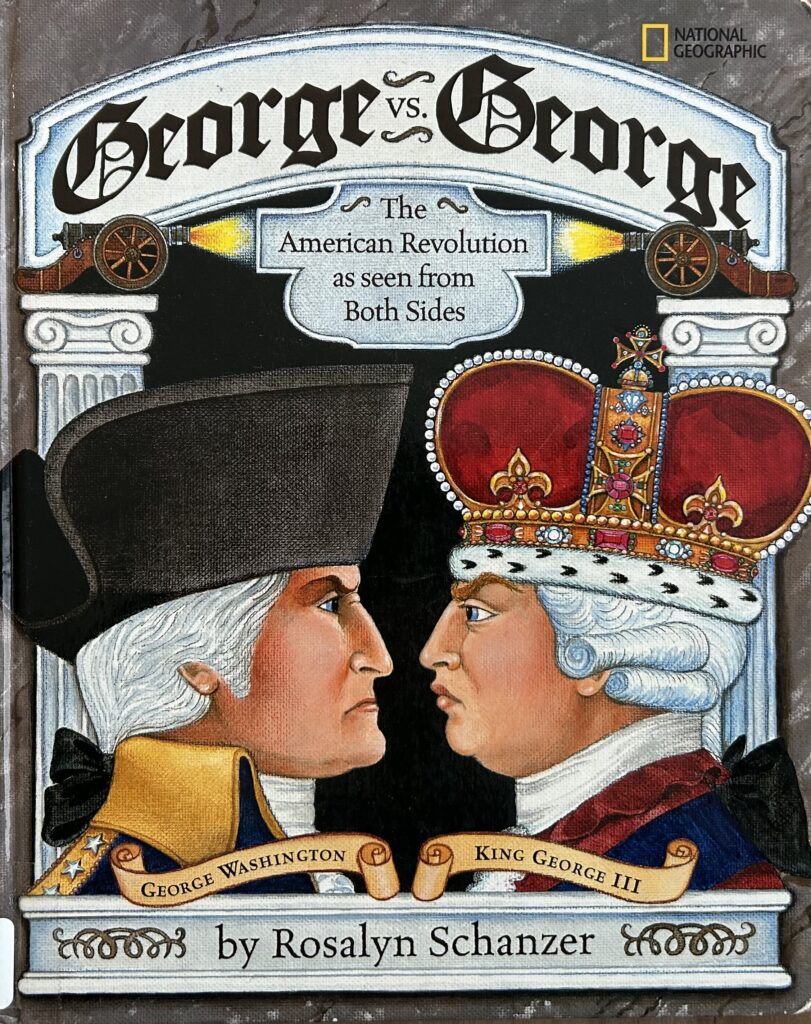
George vs. George by Rosalyn Schanzer (Cycle 3 Week 3 History)
This is one of those books that gets kids really thinking! It compares George Washington and King George III side by side, showing how the two men actually had a lot in common while telling the story of the American Revolution from both perspectives. I love that it helps kids understand that history isn’t always as simple as “good guys vs. bad guys.” The illustrations are fantastic, and it’s packed with interesting details that spark great discussions. A perfect read aloud for Cycle 3 when you’re diving into the Revolutionary War!

Let It Begin Here! by Don Brown (Cycle 3 Week 3 History)
This book walks kids through the 24 hours leading up to the first battles of the American Revolution, starting with Paul Revere’s midnight ride all the way through the battles at Lexington and Concord. Don Brown’s watercolor illustrations pull you right into the action, and the story is full of amazing details that kids eat up, like the 78 year old man who fought off British soldiers and lived another 18 years to tell about it! It’s a vivid and exciting read aloud that makes this pivotal moment in American history feel real for Cycle 3.
Here are our favorite picture books for Cycle 2 Week 4:

When Washington Crossed the Delaware by Lynne Cheney (Cycle 3 Week 4 History)
This one gives me chills every time we read it! It tells the true story of those ten critical days in 1776 when George Washington made the bold decision to cross the icy Delaware River on Christmas night and launch a surprise attack that helped turn the tide of the Revolution. The oil paintings are absolutely breathtaking, and the book includes real firsthand accounts from soldiers who were there. It’s a powerful read aloud that brings this pivotal moment in American history to life for Cycle 3!

The 4th of July Story by Alice Dalgliesh (Cycle 3 Week 4 History)
This is a classic that has been around for decades and it’s still one of the best ways to introduce little ones to the story of American independence! It follows the events leading up to the signing of the Declaration of Independence through the eyes of the people living in the colonies at the time. This is a perfect read for Week 4 when we’re learning about the Declaration of Independence, because it walks kids right through what happened and why it mattered in a way that feels exciting and patriotic. It’s one of those books that makes the 4th of July mean so much more to your family!

Thomas Jefferson Builds a Library by Barb Rosenstock (Cycle 3 Week 4 History). This book is a treasure for any book loving family! It tells the story of Thomas Jefferson’s lifelong passion for collecting books. He read everything he could get his hands on and built one of the largest personal libraries in America. When the British burned the Library of Congress during the War of 1812, Jefferson offered his entire collection to rebuild it, and that personal library became the foundation of the Library of Congress we know today. John O’Brien’s detailed illustrations are full of charm and whimsy, with books spilling off every surface. This is a wonderful read for Week 4 when we’re learning about the Declaration of Independence, because it gives kids a personal and fun look at the brilliant mind behind that incredible document. Your little book lovers will feel a real connection to Jefferson after this one!

Leave It to Abigail! The Revolutionary Life of Abigail Adams by Barb Rosenstock (Cycle 3 Week 4 History) I love this book so much! It tells the story of Abigail Adams, who was so much more than just a president’s wife. While John Adams was away helping build a new nation, Abigail was running the family farm, raising their children, and writing letter after letter full of fierce opinions and brilliant advice. She famously urged her husband to “remember the ladies” when writing the new laws of the land. This is a wonderful read for Week 4 when we’re learning about the Declaration of Independence, because Abigail was right in the middle of all that revolutionary action, pushing for freedom and equality behind the scenes. It’s a great way to show your kids, especially your girls, that women played a huge role in the founding of our country even when they weren’t always in the spotlight!

The Noisy Paint Box by Barb Rosenstock (Cycle 3 Week 4 Fine Arts)
This book tells the true story of Vasily Kandinsky, one of the very first abstract artists. As a child, Kandinsky could actually hear colors and see sounds, and the book beautifully shows how that experience shaped his groundbreaking art. The illustrations are gorgeous and full of color and energy. My kids are fascinated by the idea that someone could hear a color sing or see music dance!
Here are our favorite picture books for Cycle 2 Week 5:

Harold and the Purple Crayon by Crockett Johnson (Cycle 2 Week 5 Fine Arts).
In this whimsical classic, Harold creates an entire world with just a purple crayon and his imagination. As he draws paths, buildings, and landscapes, kids get a playful introduction to perspective, shape, and spatial thinking. This book ties in perfectly with this week’s fine arts focus on drawing and visual perspective!

George Washington and the General’s Dog by Frank Murphy (Cycle 3 Week 5 History)
Kids love this true story! During the American Revolution, George Washington found a lost dog on the battlefield and discovered it belonged to the British general. What he did next says a lot about his character. It’s a Step 3 early reader, so it’s great for kids who are starting to read on their own, and it’s a fun way to learn something unexpected about our first president. A sweet companion to Week 5 history about George Washington!

George Washington: The First President by Sarah Albee (Cycle 3 Week 5 History)
This Level 2 I Can Read book is a great early reader biography that walks kids through the highlights of George Washington’s life — from leading the colonists to victory in the Revolutionary War to becoming the very first president. It’s packed with fun details kids will love (one of his dogs was named Sweetlips!) and includes a timeline, historical illustrations, and extra facts in the back. It lines up perfectly with Week 5 when our history sentence is all about Washington being granted the full powers of the presidency in 1789. A fun and easy read that makes that memory work stick!

The House That George Built by Suzanne Slade (Cycle 3 Week 5 History)
This clever book tells the story of how President George Washington oversaw the building of the White House, from holding a contest to choose the design to figuring out how to haul thousands of heavy bricks to the construction site. It’s written in a fun cumulative rhyme style, like “The House That Jack Built,” which kids really enjoy. The watercolor illustrations are charming and it’s a great companion to Week 5 history when you’re learning about George Washington and the presidency!

Take the Lead, George Washington by Judith St. George (Cycle 3 Week 5 History)
This fun book takes kids back to when George Washington was just a teenager! At 16, he got the chance to go on a wilderness surveying trip that was full of danger and adventure. It was a turning point that shaped the grit and determination he’d carry with him the rest of his life, from leading the Revolutionary War to becoming our first president. Kids love hearing about Washington as a young man, and it pairs perfectly with Week 5 history about George Washington and the presidency!

Ten Ways to Hear Snow by Cathy Camper (Cycle 3 Week 5 Science)
This is such a beautiful, quiet book. It follows a girl named Lina on a snowy morning walk to her grandmother’s house, and along the way she discovers ten different ways to hear snow, from the muffled silence after a blizzard to the scrape of shovels on sidewalks. The illustrations are gorgeous and it’s a wonderful way to get kids thinking about using their senses, especially hearing, to notice the world around them. It pairs perfectly with Week 5 science about the five main senses!

The Magic School Bus Explores the Senses by Joanna Cole and Bruce Degen (Cycle 3 Week 5 Science) This is one of the classic Magic School Bus picture books and it’s so good! Ms. Frizzle takes the class on a wild field trip where they shrink down and explore the eye, ear, tongue, nose, and skin to learn how each of our senses works. The bus literally drives into an eyeball on the cover, so you know it’s going to be a wild ride! Like all the original Magic School Bus books, the pages are packed with fun illustrations, student reports, and science facts that kids love poring over. This is a perfect fit for Week 5 when we’re learning about the five main senses, and it pairs beautifully with Ten Ways to Hear Snow for a great week of reading about how we experience the world around us!

National Park Explorers: Great Smoky Mountains by Sara Gilbert (Cycle 3 Week 5 Geography) This gorgeous little book from the National Park Explorers series takes kids on a tour of Great Smoky Mountains National Park with stunning photographs and simple, fact-packed text. Kids will learn about the park’s incredible wildlife (the Smokies are the “Salamander Capital of the World”!), the lush plant life, and activities like horseback riding and hiking. There’s even a glossary and a fun activity in the back. This one is a perfect fit for Week 5 when we’re learning about Michigan, Ohio, Indiana, Kentucky, and Tennessee, since the park sits right in the mountains of eastern Tennessee along the North Carolina border. A great way to bring that Tennessee geography to life!
Here are our favorite picture books for Cycle 2 Week 6:

Lewis and Clark: A Prairie Dog for the President by Shirley Raye Redmond (Cycle 3 Week 6 History) Kids think this one is hilarious! It tells the true story of how President Jefferson sent Lewis and Clark out west to explore, make maps, and send back presents. And what did they send? A prairie dog! It’s a Step 3 early reader so it works great for kids reading on their own, and it’s a fun and lighthearted way to learn about the Lewis and Clark expedition. It pairs perfectly with Week 6 history about the Louisiana Purchase and westward exploration!

Steamboat School by Deborah Hopkinson (Cycle 3 Week 8 History) This award winning picture book is based on the incredible true story of Reverend John Berry Meachum, who ran a school for Black students in Missouri. When a law was passed making it illegal to educate African Americans in the state, he found a brilliant loophole: he built a school on a steamboat in the middle of the Mississippi River, which was federal property! The illustrations are beautiful and kids are amazed by the creativity and determination in this story. A powerful companion to Week 8 history about the Missouri Compromise and the realities of slavery in Missouri!

The Magic School Bus Inside the Human Body by Joanna Cole and Bruce Degen (Cycle 3 Week 6 Science) This is one of the all time classic Magic School Bus books and for good reason! Ms. Frizzle’s class takes the wildest field trip ever when the bus shrinks down and travels through a student’s body. They ride through the digestive system, travel through the bloodstream, and explore organs along the way. The pages are packed with hilarious illustrations, student reports, and real science facts. This is a fantastic read for Week 6 when we’re learning about the digestive system, because the bus literally goes on the full journey from mouth to stomach to intestines. But honestly it covers so many body systems that you could pull it out again during our circulatory and respiratory weeks too. It’s a must have for Cycle 3 science!

Garden in Your Belly: Meet the Microbes in Your Gut by Masha D’Yans (Cycle 3 Week 6 Science) The illustrations in this book are absolutely stunning — Masha D’Yans uses gorgeous watercolors to turn the inside of your digestive system into a magical garden full of tiny microbe “helpers.” Kids learn how the trillions of microorganisms in their gut work to fight germs, give them energy, and even influence how they feel. It also encourages healthy habits like exercise, drinking water, and eating good foods to keep that inner garden thriving. This pairs beautifully with Week 6 when we’re learning the parts of the digestive system: mouth, esophagus, stomach, liver, small intestine, and large intestine. It’s such a creative way to get kids excited about what’s happening inside their bodies!
Here are our favorite picture books for Cycle 2 Week 7:

Our Flag Was Still There by Jessie Hartland (Cycle 3 Week 7 History)
This is the true story of Mary Pickersgill, the seamstress who sewed the enormous thirty by forty two foot flag that flew over Fort McHenry during the War of 1812 and inspired Francis Scott Key to write “The Star Spangled Banner.” The folk art style illustrations are charming and full of fun details, and kids love learning about the women behind this iconic piece of American history. It pairs perfectly with Week 7 history about the War of 1812 and the Monroe Doctrine!

13 Ways to Eat a Fly by Sue Heavenrich (Cycle 3 Week 7 Math)
My kids think this one is hilariously gross and they beg to read it again and again! It’s a clever reverse counting book that follows thirteen flies as they get picked off one by one by different predators, from birds and bats to a fly eating fungus. Each page is packed with real science about how these predators catch their prey. A fun and silly read aloud to pull out during Week 7 when you’re working on your 13s!

When Sue Found Sue by Toni Buzzeo (Cycle 3 Week 7 Geography)
This is such a fun book for little dinosaur lovers! It tells the true story of Sue Hendrickson, who discovered the largest and most complete T. rex fossil ever found right in the hills of South Dakota. What I love about reading this one during Week 7 is that we’re learning about states like South Dakota and its capital Pierre, and this book brings that state to life in the most exciting way. Your kids will love hearing about how Sue spotted those giant bones sticking out of a cliff and how the discovery became one of the most famous in paleontology. It’s a great way to make our geography memory work feel real and adventurous!
Here are our favorite picture books for Cycle 2 Week 8:

Otis and the Tornado by Loren Long (Cycle 3 Week 8 Geography)
This is a sweet and exciting story about Otis the tractor and his farm friends as they face a powerful tornado. When the storm comes, everyone must work together to stay safe, and Otis shows courage by helping a friend who is in danger. I love reading this during Week 8 when we learn about states like Oklahoma and Kansas, where tornadoes and strong prairie storms are common. This story helps kids picture the wide farmland and changing weather of the Great Plains and makes our geography memory work feel more real and easy to remember.

The Circulatory System by Joseph Midthun and Samuel Hiti (Cycle 3 Week 8 Science). My kids loved the cartoon style of this book! It’s part of the Building Blocks of Science series from World Book, and it uses fun, comic style illustrations to teach kids all about the circulatory system, including the heart, blood vessels, and how oxygen gets pumped throughout the body. The cute heart character on the cover gives you a good idea of the playful approach they take. It makes a pretty complex topic feel accessible and entertaining for younger kids. This is a perfect match for Week 8 when we’re learning about the circulatory system in our science memory work. It’s a great one to read through together and then come back to as a reference!

The Magic School Bus Has a Heart by Anne Capeci (Cycle 3 Week 8 Science) You can’t go wrong with Ms. Frizzle! In this Scholastic Level 2 reader, the class shrinks down and takes a wild ride through the human body to learn all about the heart and circulatory system. Kids get to follow along as the bus travels through blood vessels surrounded by red blood cells — it’s such a fun, visual way to understand how the heart pumps blood through the body. This is a perfect pair for Week 8 when we’re memorizing the six parts of the circulatory system: heart, arteries, veins, capillaries, red and white blood cells, and platelets. Nothing makes science memory work stick like a Magic School Bus adventure!
Here are our favorite picture books for Cycle 2 Week 9:

Ohana Means Family by Ilima Loomis (Cycle 3 Week 9 Geography)
This beautiful book follows a Hawaiian family as they grow taro and make poi for a traditional luau celebration. The illustrations are gorgeous and it gives kids a lovely window into Hawaiian culture and the land itself. It pairs perfectly with Week 9 geography when you’re learning about Honolulu and the state of Hawaii!

William Still and His Freedom Stories by Don Tate (Cycle 3 Week 9 History)
This is the powerful true story of William Still, known as the Father of the Underground Railroad. He helped freedom seekers escape slavery, carefully recording their stories and even reuniting separated families along the way. The illustrations are wonderful and it connects beautifully to Week 9 history about the Fugitive Slave Act and the events leading up to secession.

Freedom Song by Sally M. Walker (Cycle 3 Week 9 History)
This is a powerful but gentle picture book that tells the true story of the Montgomery Bus Boycott during the civil rights movement. It shows how ordinary people worked together peacefully to stand against unfair segregation laws after Rosa Parks was arrested for refusing to give up her seat on a bus. I love reading this during Week 9 when we learn about the civil rights movement, because it helps kids understand how brave men, women, and children helped bring change in the United States. This book makes our history memory work feel real and helps children see how courage and perseverance can make a difference.

The Price of Freedom by Judith Bloom Fradin (Cycle 3 Week 9 History)
This is an informative picture book that explains the history of the civil rights movement and the long fight to end segregation in the United States. It introduces important people and events that helped bring equal rights to all Americans, including peaceful protests, court decisions, and the courage of ordinary citizens. I like reading this during Week 9 when we learn about the civil rights movement, because it helps kids understand why this time in history was so important. This book makes our history memory work feel more meaningful and helps children see how people worked together to bring change.

Follow the Drinking Gourd: An Underground Railroad Story by Cari Meister (Cycle 3 Week 9 History)
This is a powerful retelling of the famous story of enslaved people following the Big Dipper, known as the Drinking Gourd, north to freedom on the Underground Railroad. Kids will be fascinated by the idea that people used the stars to navigate their way to freedom. This is a wonderful fit for Week 9 when we’re learning about secession and the Fugitive Slave Act, because the Underground Railroad was a direct response to the horrors of slavery and the laws that tried to keep people enslaved. It’s one of those books that opens up such important conversations with your kids about bravery, freedom, and doing what’s right even when it’s dangerous.

The Magic School Bus Chapter Book #6: The Giant Germ by Eva Moore (Cycle 3 Week 9 Science). You really can’t go wrong with Ms. Frizzle! In this adventure, the class shrinks down and gets an up close look at germs and how the body fights them off. The kids will love the wild ride through the bloodstream surrounded by red blood cells while learning about how our bodies defend against infection. It’s a chapter book so it works great as a read aloud over a few days. This pairs nicely with Week 9 when we’re learning about the lymph system, because the lymphatic system is our body’s defense against germs and infection. It’s science class meets wild adventure, which is exactly what the Magic School Bus does best!
Here are our favorite picture books for Cycle 2 Week 10:

Journey of a Pioneer (DK Super Readers Level 2) by DK (Cycle 3 Week 10 History)
This is a great early reader for your younger kids! It follows a girl named Olivia as her family travels from Missouri all the way to the Oregon Territory along the Oregon Trail, told through her diary entries. The text is simple enough for kids just starting to read on their own, but it’s full of real historical details about what pioneer life was like. This fits perfectly with Week 10 when we’re learning about Manifest Destiny, because it shows kids firsthand what it was like for families who packed up everything they had and headed west in search of a new life. It’s a quick, engaging read that makes that big concept feel real and personal!

Gold Fever! Tales of the California Gold Rush by Rosalyn Schanzer (Cycle 3 Week 10 History)
This is a fun and engaging picture book that tells the story of the California Gold Rush and the thousands of people who rushed west hoping to find gold. It shows what life was like for miners, how towns grew quickly, and how the discovery of gold changed the United States. I love reading this during Week 10 when we learn about westward expansion and the growth of the country, because it helps kids picture why so many people moved to places like California.

Pedro’s Pan: A Gold Rush Story by Matthew Lasley (Cycle 3 Week 10 Geography)
My kids thought it was the funniest thing that this whole story is told from the point of view of a gold pan! It follows the true story of Felice “Pedro” Pedroni, an Italian immigrant who headed up to Alaska and ended up launching one of the richest gold rushes in the state’s history. The pan narrates all their adventures together through the harsh wilderness, keeping an eye out for wild animals and always on the hunt for gold. It’s such a clever and fun way to learn about gold panning and American history. This one is a perfect read for Week 10 when we’re learning about states like Montana, Idaho, Washington, Oregon, and Alaska, because the whole story takes place in the Alaskan wilderness.
Here are our favorite picture books for Cycle 2 Week 11:

Louisa May’s Battle by Kathleen Krull (Cycle 3 Week 11 History)
I love this book because it tells a side of Louisa May Alcott’s story that most people don’t know! Before she wrote Little Women, she served as a Civil War nurse, and that experience deeply shaped her writing. The illustrations are beautiful and the back matter about women in medicine during the Civil War is fascinating. A perfect read aloud when you’re studying the Civil War during Week 11!

Abraham Lincoln: Magic Tree House Fact Tracker by Mary Pope Osborne and Natalie Pope Boyce (Cycle 3 Week 11 History) This is the perfect nonfiction companion to Abe Lincoln at Last! It’s packed with real photographs, illustrations, and fascinating facts about Abraham Lincoln’s life, from his childhood all the way through his presidency and the Civil War. Jack and Annie pop in throughout with extra tidbits that make it feel fun and familiar for Magic Tree House fans. This is a great one for Week 11 when we’re studying the Civil War!

Abe Lincoln: The Boy Who Loved Books by Kay Winters (Cycle 3 Week 11 History)
This is one of those books that just makes you smile from beginning to end. It follows young Abe Lincoln from his birth in the woods of Kentucky through his childhood, his family’s move to Indiana, and his deep love for reading and learning. Even through tough times like losing his mother, Abe never stopped reaching for books and soaking up words. The story beautifully shows how that little boy who loved to read grew into a president who used his words to inspire a nation and set people free. It’s such a wonderful read for Week 11 when we’re learning about the Civil War, because your kids will get to see the early life of the man who led our country through that incredibly difficult time.

Abe Lincoln at Last! by Mary Pope Osborne (Cycle 3 Week 11 History)
If your kids love the Magic Tree House series, they are going to be so excited about this one! Jack and Annie travel back in time to Washington, D.C., in 1861 and get to meet Abraham Lincoln himself. But the new president is a very busy man because the nation is in crisis. The story is full of adventure and history all woven together the way Mary Pope Osborne does so well. This is a great companion read for Week 11 when we’re learning about the Civil War, because your kids will get to experience what it was like during those early days of Lincoln’s presidency when the country was falling apart. It’s a little longer than a typical picture book, so it works perfectly as a read aloud over a few days, and the kids will be begging you to keep going!

Dancing Hands: How Teresa Carreño Played the Piano for President Lincoln by Margarita Engle (Cycle 3 Week 11 History)
What a beautiful book this is! It tells the true story of Teresa Carreño, a young piano prodigy from Venezuela whose family fled a revolution and came to the United States during the Civil War. Even though she felt lonely in a new country where few people spoke Spanish, Teresa kept playing her piano, and she became so famous that she was invited to play for President Lincoln himself. This is a wonderful addition to our Week 11 reading when we’re learning about the Civil War, because it gives kids a completely different perspective on that time period through the eyes of a young immigrant girl and her incredible gift. It’s one of those books that just fills your heart right up!

Looking at Lincoln by Maira Kalman (Cycle 3 Week 11 History) This book is just so charming! It’s told from the perspective of a curious little girl who wants to find out everything she can about Abraham Lincoln. And the details she discovers are so fun for kids, like that Lincoln had a dog named Fido, loved Mozart and apples, and kept his notes tucked inside his hat! But it also covers the bigger things too, from his boyhood in a log cabin all the way through his presidency and his deep belief in freedom for all people. This is another wonderful one for Week 11 when we’re studying the Civil War, and it pairs beautifully with our other Lincoln books because it gives such a warm, personal look at who he really was beyond just being a president!
Here are our favorite picture books for Cycle 2 Week 12:

Free At Last by Sojourner Kincaid Rolle (Cycle 3 Week 12 History)
This beautiful book traces the story of Juneteenth, from that day in 1865 when enslaved people in Galveston, Texas finally learned they were free, all the way to how we celebrate it today. It’s written as a free verse poem with stunning oil paintings, and it really brings this important moment in American history to life. A wonderful read aloud to pair with Week 12 history about the end of the Civil War!
Here are our favorite picture books for Cycle 2 Week 13:

Step Right Up: How Doc and Jim Key Taught the World About Kindness by Donna Janell Bowman (Cycle 3 Week 13 History)
Oh my goodness, your kids are going to love this one! It tells the incredible true story of William “Doc” Key, a formerly enslaved man and self trained veterinarian who raised a horse named Beautiful Jim Key and taught him to read, write, spell, and even do math. The two became a famous traveling act and spread a message of kindness and humane treatment of animals everywhere they went. This book is a wonderful fit for Week 13 when we’re learning about the Fourteenth Amendment, because Doc Key’s story is such a powerful example of what formerly enslaved people accomplished when they were finally free to use their gifts.

The Camping Trip that Changed America by Barb Rosenstock (Cycle 3 Week 13 Geography)
This is the true story of when President Teddy Roosevelt went camping with naturalist John Muir in Yosemite in 1903, and that trip inspired Roosevelt to protect America’s wild places through the National Parks system. The watercolor illustrations are beautiful and kids love the adventure of the story. It ties in wonderfully with Week 13 geography when you’re learning about the Western Mountains including the Sierra Nevadas where Yosemite sits!

The Rocky Mountains by Marion Dane Bauer (Cycle 3 Week 13 Geography) This is a great little early reader for your younger kiddos! It’s part of the Wonders of America series and is packed with fun facts about how the Rocky Mountains formed and what animals call them home. The text is simple enough for beginning readers to tackle on their own, but it’s also a perfect quick read aloud if you have littles who aren’t reading yet. I love using books like this during Week 13 when we’re learning about the western mountains, because the Rockies are such an iconic part of that mountain range stretching across the western United States. It’s short and sweet but gives kids a great introduction to one of the most famous mountain ranges in North America!
Here are our favorite picture books for Cycle 2 Week 14:

The Mighty Steam Engine by Yvonne Ng (Cycle 2 Week 14 History). My kids loved this one! It’s written in that fun, cumulative “This is the House that Jack Built” style, taking readers through all the inner workings of a steam engine piece by piece. There are great sound effects and repetition that make it feel like you’re actually riding on a train, and the illustrations by Richard Smythe include simple cutaway diagrams that show kids the parts inside the engine. There’s even an author’s note at the end about reverse engineering and how to explore how things work with your kids. This is a perfect read for Week 14 when we’re studying the tycoons and the Industrial Age, because steam power was at the heart of that whole era. Plus the author is actually a mechanical engineer, so you know the details are solid!

The Legend of the Teddy Bear by Frank Murphy (Cycle 3 Week 14 History) Kids are always so amazed to learn where the teddy bear actually came from! This book tells the true story of the day President Theodore Roosevelt went on a hunting trip and refused to shoot a cornered bear. Two clever candy store owners heard the story and turned it into the most beloved stuffed animal in American history. The illustrations by Gijsbert van Frankenhuyzen are warm and beautiful, and the story is told in a way that even the youngest listeners can enjoy. This is a fun addition to Week 14 when we’re learning about the tycoons and the Industrial Age, because Roosevelt was president right in the middle of that era and this story shows both his character and the kind of entrepreneurial spirit that defined the times!

Teedie: The Story of Young Teddy Roosevelt by Don Brown (Cycle 3 Week 14 History). This is such a sweet book about one of our most larger than life presidents! It follows Teddy Roosevelt as a little boy nicknamed Teedie, who was sickly and struggled with terrible asthma but absolutely refused to let it slow him down. He threw himself into exercise, adventure, and learning about nature with an energy that was truly remarkable. Don Brown’s watercolor illustrations are charming and full of warmth. This pairs nicely with Week 14 when we’re studying the tycoons and the Industrial Age, because Roosevelt grew up to become president right in the middle of that era.

Your Guide to the Periodic Table by Gill Arbuthnott (Cycle 3 Week 14 Science) This is a fantastic resource for when you start diving into the elements! It introduces the periodic table through fun stories and interesting facts, like what makes sulfur smell so bad or why hydrogen is explosive. It’s written by a former biology teacher, so the explanations are clear and kid friendly. A great companion to Week 14 science when you’re learning about what an element is!

The Secret Garden of George Washington Carver by Gene Barretta (Cycle 3 Week 14 History) This gorgeous picture book follows George Washington Carver from his birth into slavery to his incredible career as a botanist and inventor. It shows how a secret childhood garden sparked his love of nature and learning that would change American agriculture forever. The illustrations are stunning and it fits perfectly with Week 14 history about how innovators developed American resources during the Industrial Age!

Billions of Bricks by Kurt Cyrus (Cycle 3 Week 14 History) This fun rhyming book follows a construction crew as they build amazing structures out of bricks, brick by brick. Kids love the rhythm and the illustrations, and it’s a sneaky way to reinforce counting skills too. It pairs nicely with Week 14 history about the tycoons and the Industrial Age when America was building and growing at an incredible pace!
Here are our favorite picture books for Cycle 2 Week 15:

The Statue of Liberty (Wonders of America) by Marion Dane Bauer (Cycle 3 Week 15 History) This Level 1 early reader is perfect for younger siblings to read along with during Cycle 3! It tells the story of how the Statue of Liberty came to stand in New York Harbor and why she was such an important sight for the millions of immigrants arriving in America. The illustrations are simple and sweet, and the text is easy enough for beginning readers to enjoy on their own. It pairs nicely with Week 15 history about immigrants coming to America!

Cornelius Vanderbilt and the Railroad Industry by Therese Shea (Cycle 3 Week 14 History) This is a great nonfiction book for kids who love learning about how things work and how people built their empires! It’s part of the Great Entrepreneurs in U.S. History series and tells the story of Cornelius Vanderbilt, who started out as a young ferry operator and grew to become one of the wealthiest and most powerful men in America through the shipping and railroad industries. It’s packed with real photographs and historical details that bring this era to life. This is a perfect fit for Week 14 when we’re learning about the tycoons and the Industrial Age, because Vanderbilt was one of the biggest tycoons of them all. It helps kids understand how the railroads transformed the country and made fortunes for the men who built them!

The Statue of Liberty by Lucille Recht Penner (Cycle 3 Week 15 History)
This Step 2 early reader tells the story of how the Statue of Liberty was sculpted in France, shipped across the ocean in pieces, and put together in New York Harbor. It’s simple enough for beginning readers to enjoy on their own, and it uses a mix of illustrations and photographs that kids love. A great one to pair with Week 15 history about immigrants coming to America, since Lady Liberty was the first thing so many of them saw when they arrived!

Coming to America: The Story of Immigration by Betsy Maestro (Cycle 3 Week 15 History)
This is one of those books that really helps kids see the big picture of our country’s story. It walks through the history of immigration from thousands of years ago all the way to the present day, explaining why different groups of people came to America, how they made the journey, and what they hoped to find when they got here. I love that it doesn’t shy away from the harder parts of history either, like the harsh treatment of Native Americans and the forced immigration of Africans. It also covers Ellis Island and the different laws our country has adopted over the years to control immigration.

Brave Girl: Clara and the Shirtwaist Makers’ Strike of 1909 by Michelle Markel (Cycle 3 Week 15 History) What an inspiring book! It tells the true story of Clara Lemlich, a young immigrant from Ukraine who came to America and ended up working in the terrible conditions of a garment factory in New York City. When she’d had enough, she stood up in front of thousands of workers and called for a strike, sparking the largest walkout of women workers in American history. This is a great read for Week 15 when we’re learning about immigrants coming to America, because Clara’s story shows both the harsh reality many immigrants faced when they got here and the incredible courage they had to fight for something better. Your kids will be cheering her on by the last page!

Let’s Investigate Electricity by Jacqui Bailey (Cycle 3 Week 15 Science)
This hands on science book walks kids through simple experiments about electricity using everyday materials. Each investigation includes a materials list and a clear explanation of the science behind it. It’s a fun way to explore how atoms and electrons work in the real world, and ties in nicely with Week 15 science about the parts of an atom!

Paddle-to-the-Sea by Holling Clancy Holling (Cycle 3 Week 15 Geography)
This Caldecott Honor classic follows a small wooden canoe carved by a Native American boy as it travels through all five Great Lakes and eventually reaches the Atlantic Ocean. Each chapter brings a new adventure, and the stunning watercolor illustrations teach kids about the geography, wildlife, and industry of the Great Lakes region along the way. It’s a longer read aloud that’s perfect for spreading across several days. A beautiful companion to Week 15 geography when you’re memorizing the Great Lakes!

The Great Lakes: Our Freshwater Treasure by Barb Rosenstock (Cycle 3 Week 15 Geography) The illustrations in this book are just breathtaking! Barb Rosenstock takes readers on a beautiful journey through all five Great Lakes, exploring their history, wildlife, and why they matter so much to our country. Jamey Christoph’s watercolor illustrations capture the stunning beauty of these massive bodies of water in a way that really makes kids appreciate what a treasure they are. This is a perfect fit for Week 15 when we’re learning about the Great Lakes in our geography memory work. It’s one of those books that makes you want to plan a family road trip to go see them in person!

The Metric System by David A. Adler (Cycle 2 Week 15 Math).
This is a really handy book to have on your shelf all cycle long! It breaks down the metric system in a way that kids can actually understand, with fun illustrations and hands on activities that teach them how to convert inches to centimeters, pounds to kilograms, and more. There’s even a ruler on the jacket flap that kids can cut out with both metric and standard measurements.
Here are our favorite picture books for Cycle 2 Week 16:

Finding Winnie by Lindsay Mattick (Cycle 2 Week 14 History).
My kids could not believe this story is real! It’s about a Canadian soldier named Harry Colebourn who bought an orphaned bear cub at a train station on his way to fight in World War I and named her Winnie after his hometown of Winnipeg. The bear became the regiment’s mascot and traveled with the soldiers all the way to England. When the troops moved to the front lines in France, Harry brought Winnie to the London Zoo, where a little boy named Christopher Robin fell in love with her, and the rest is literary history. This is a perfect read for Week 16 when we’re learning about World War I, because it gives kids this gentle, touching way into a really big topic through a story they’ll never forget!

Knit Your Bit: A World War I Story by Deborah Hopkinson (Cycle 3 Week 16 History)
This is such a sweet and fun story! It follows a boy named Mikey whose dad has gone off to fight in World War I. His sister Ellie starts knitting scarves and socks to send to soldiers, but Mikey thinks knitting is just for girls. That is, until the kids hear about a big Knitting Bee in Central Park and the girls say the boys are too scared to learn. Mikey and his friends form a Boys’ Knitting Brigade and the competition is on! It’s based on a real knitting event that happened in Central Park in 1918 as part of the American Red Cross effort to keep soldiers warm in the trenches. This is a perfect book for Week 16 when we’re learning about World War I, because it shows kids what life was like on the home front and how even children found ways to help.

Amber’s Atoms by E.M. Robinson (Cycle 3 Week 16 Science)
This clever book introduces the first ten elements of the periodic table through fun rhyming riddles featuring an adorable puppy named Amber. It makes chemistry feel playful and approachable for young kids, and they love trying to guess each element before the answer is revealed. A perfect read aloud to go alongside Week 16 science when you’re memorizing the first elements of the periodic table!

Hydrogen (Elements of Life) by Nancy Dickmann (Cycle 3 Week 16 Science)
This colorful book dives deep into just one element: hydrogen! Kids learn all about what makes hydrogen special, where it’s found, and why it matters. It’s part of the Elements of Life series, and the illustrations and layout make chemistry feel approachable and fun for young readers. A perfect companion to Week 16 science when you’re memorizing the first four elements of the periodic table, starting with hydrogen!
Here are our favorite picture books for Cycle 2 Week 17:

Friends for Freedom: The Story of Susan B. Anthony & Frederick Douglass by Suzanne Slade (Cycle 3 Week 17 History) This book tells the incredible true story of an unlikely friendship that changed America. Susan B. Anthony and Frederick Douglass came from completely different backgrounds but shared a deep belief in equality, and they worked side by side for almost fifty years fighting for freedom and justice. The book doesn’t shy away from the hard parts either, like the hecklers, the violence, and even the disagreements between them. Nicole Tadgell’s watercolor illustrations are beautiful and really capture the passion they both had. This pairs perfectly with Week 17 when we’re learning about the Nineteenth Amendment, because Susan B. Anthony was one of the most important figures in the fight for women’s right to vote, and her friendship with Douglass shows how the movements for abolition and suffrage were deeply connected.

Two Friends: Susan B. Anthony and Frederick Douglass by Dean Robbins (Cycle 3 Week 17 History) This is such a wonderful companion to Friends for Freedom! It tells the story of the real friendship between Susan B. Anthony and Frederick Douglass, who were actually neighbors in Rochester, New York. The book imagines them having tea together and talking about their shared dreams of equality, with Susan fighting for women’s right to vote and Frederick fighting for the rights of Black Americans. It’s written simply enough for even the youngest listeners but carries such a powerful message. This is another great pick for Week 17 when we’re learning about the Nineteenth Amendment, and it pairs perfectly with Friends for Freedom to give kids two different looks at this incredible friendship that helped shape our country!

I Could Do That! Esther Morris Gets Women the Vote by Linda Arms White (Cycle 3 Week 17 History) I love this spunky book! It tells the true story of Esther Morris, a woman who spent her whole life saying “I could do that!” whenever someone told her she couldn’t. She moved out to Wyoming Territory and helped convince the lawmakers there to give women the right to vote, making Wyoming the first place in the country where women could cast a ballot. She even became the first female justice of the peace! Nancy Carpenter’s lively illustrations are full of personality and perfectly capture Esther’s bold spirit. This is a wonderful read for Week 17 when we’re learning about the Nineteenth Amendment, because Esther Morris helped get the ball rolling for women’s suffrage long before it became a national reality.

Elizabeth Started All the Trouble by Doreen Rappaport (Cycle 3 Week 17 History) What a fun title! This book traces the entire women’s suffrage movement starting with Elizabeth Cady Stanton, who stood up and declared that women deserved the same rights as men. From there it follows the brave women who picked up the cause over the decades, marching, protesting, and refusing to back down until women finally won the right to vote. This is a fantastic addition to Week 17 when we’re learning about the Nineteenth Amendment, and it pairs wonderfully with Friends for Freedom, Two Friends, and I Could Do That to give your kids a really full picture of the long fight for women’s suffrage. You’ll have a whole shelf of strong women to read about that week!
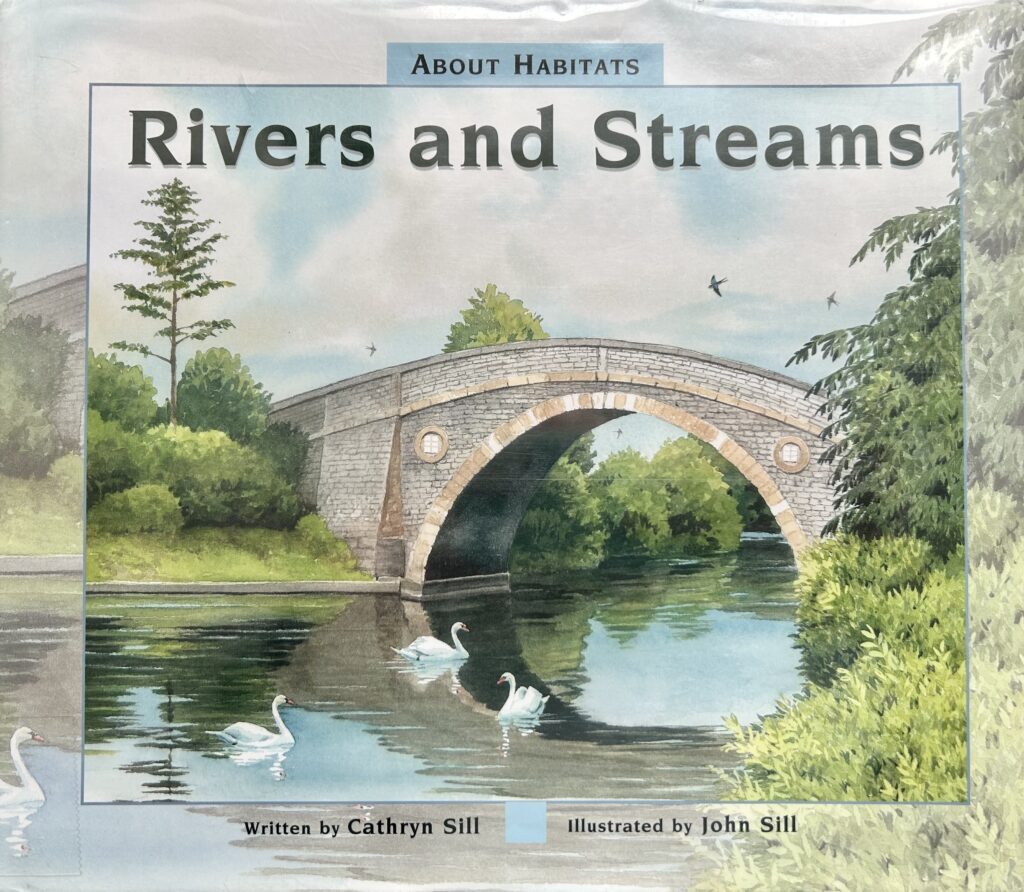
About Habitats: Rivers and Streams by Cathryn Sill (Cycle 3 Week 17 Geography) This is a beautiful, simple introduction to rivers and streams that’s perfect for younger kids. The illustrations by John Sill are gorgeous, showing rivers from all over the world, from mountain brooks to the mighty Amazon. The text is short and easy to understand, explaining how different animals and plants have adapted to life in and along these waterways. There’s also a helpful glossary in the back if your little ones have questions. This is a great fit for Week 17 when we’re learning about rivers in the eastern United States, because it gives kids a broader understanding of what rivers are and why they matter before we dive into specific ones. It’s a quick read that pairs nicely with The Mighty Mississippi!

River by Elisha Cooper (Cycle 3 Week 17 Geography)
This book is absolutely gorgeous. It follows a young woman as she launches her canoe in the Adirondack Mountains and paddles three hundred miles down the Hudson River all the way to New York City. The watercolor illustrations are just stunning, and every page is filled with the wildlife, plants, and changing landscapes she passes along the way. It’s one of those books you want to take your time with and just soak in all the beautiful details. This is a perfect fit for Week 17 when we’re learning about rivers in the eastern part of the United States, because the Hudson River is one of the most iconic eastern rivers.
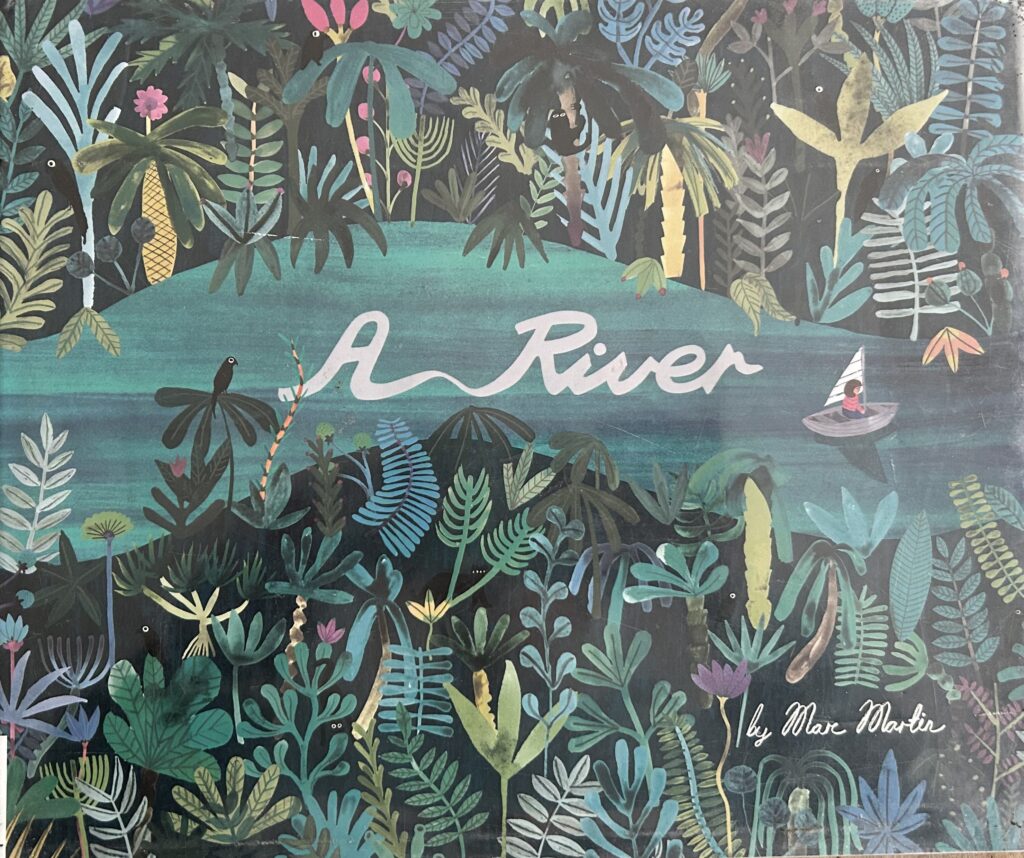
A River by Marc Martin (Cycle 2 Week 17 Geography).
This book is just gorgeous. It follows a little girl who looks out her bedroom window at a river winding through the city and imagines herself floating down it in a small sailboat. The journey takes her past factories and farmlands, freeways and forests, all the way out to the ocean and back home again. The watercolor and gouache illustrations are absolutely stunning with rich colors and textures on every page. It’s more of an imaginative journey than a nonfiction book, but that’s what makes it so special for Week 17 when we’re learning about rivers. It’s a beautiful way to spark your kids’ curiosity about where a river might take them!

The Mighty Mississippi by Marion Dane Bauer (Cycle 3 Week 17 Geography)
Another great one from the Wonders of America series! This little book takes kids on a tour of the Mississippi River, starting way up in northern Minnesota at Lake Itasca and following it all the way down to the Gulf of Mexico. It covers how people have used the river to ship goods and enjoy its beauty throughout our country’s history. Just like The Rocky Mountains book, the text is simple enough for early readers but still packed with interesting facts that make it a great read aloud for the younger ones too. This pairs perfectly with Week 17 when we’re learning about rivers in the eastern part of the United States, because the Mississippi is one of the mightiest and most important rivers in our country. It’s a quick read that gives kids a wonderful introduction to this incredible waterway!

Nitrogen (Elements of Life) by Nancy Dickmann (Cycle 3 Week 17 Science)
Another great one from the Elements of Life series! This book explores nitrogen, from how it makes up most of the air we breathe to how it helps plants grow. Kids love learning about how this element shows up in everyday life. It lines up perfectly with Week 17 science when you’re memorizing the second four elements of the periodic table, which includes nitrogen!

Oxygen (Elements of Life) by Nancy Dickmann (Cycle 3 Week 17 Science)
This book gives kids a fun, focused look at oxygen, including how it’s essential for breathing, fuels fire, and even helps form water. The bright illustrations and clear explanations make it easy for young readers to understand. It pairs nicely with Week 17 science alongside the nitrogen book, since oxygen is also one of the second four elements you’re memorizing!
Here are our favorite picture books for Cycle 2 Week 18:

Franklin and Winston by Douglas Wood (Cycle 2 Week 17 History).
This is such a unique story! It takes you inside the White House at Christmas 1941, right after Pearl Harbor, when President Franklin Roosevelt and British Prime Minister Winston Churchill spent an entire month together planning the Allied strategy for World War II. What makes it so special is the way it mixes the serious wartime discussions with these warm, humanizing moments of the two leaders celebrating the holidays together. Barry Moser’s illustrations are beautiful and the whole book has this wonderful fly on the wall feeling. This pairs perfectly with Week 18 when we’re learning about Pearl Harbor, because it picks up right where that event left off and shows how two world leaders came together to respond.

The Journey That Saved Curious George: The True Wartime Escape of Margret and H.A. Rey by Louise Borden (Cycle 3 Week 18 History)
Your kids are going to be amazed by this true story! Margret and H.A. Rey, the creators of Curious George, were living in Paris when the Nazis invaded France in 1940. They fled the city on bicycles they had built themselves, carrying little more than their manuscript for Curious George in their bags. The book follows their harrowing journey through France, Spain, and Portugal before they finally made it safely to America. Allan Drummond’s illustrations beautifully capture the urgency and emotion of their escape. This is a wonderful addition to Week 18 when we’re studying Pearl Harbor and World War II, because it gives kids a personal, relatable connection to the war through the beloved creators of a character they probably already know and love!

You Wouldn’t Want to Be a World War II Pilot! by Ian Graham (Cycle 3 Week 18 History)
My kids are obsessed with the You Wouldn’t Want to Be series and this one does not disappoint! It puts the reader right in the cockpit as a WWII pilot, covering the terrifying air battles, the training, and the incredible dangers these pilots faced every single day. David Antram’s cartoon style illustrations keep things fun and accessible even though the subject matter is serious, and there are great “handy hints” and fun facts throughout that kids love. This is a fantastic addition to Week 18 when we’re learning about Pearl Harbor and World War II, because it gives kids a really hands on feel for what the war was actually like from a perspective they don’t usually get to see.

The Butterfly by Patricia Polacco (Cycle 2 Week 18 History).
This is a powerful and beautiful book. It’s based on the true story of the author’s great aunt Monique, who lived in Nazi occupied France during World War II. Monique discovers that her mother has been hiding a Jewish girl named Sevrine in their basement, and the two girls become secret friends, playing together only after dark. Patricia Polacco’s illustrations shift from soft pinks and pastels to dark grays and reds as the danger grows, and by the end, bright butterflies return as a symbol of hope. It’s a heavier topic, so it works best for your older listeners, but it’s such an important and age appropriate way to introduce the realities of that time. This is a wonderful addition to Week 18 when we’re studying Pearl Harbor and World War II.

World War II: A Nonfiction Companion to Magic Tree House by Mary Pope Osborne (Cycle 3 Week 18 History) If your kids are Magic Tree House fans, this Fact Tracker is a must have! It’s the nonfiction research guide that goes along with the fiction book World at War, 1944, and it’s packed with real photographs, illustrations, and up to date information about World War II. Jack and Annie pop in throughout to share extra tidbits, which makes it feel familiar and fun for kids who already love the series. This is a great companion for Week 18 when we’re learning about Pearl Harbor and World War II, because it gives kids a deeper dive into the facts behind the story. It’s a little longer than a typical picture book, so it works well to read a section at a time throughout the week!.

Down the Colorado by Deborah Kogan Ray (Cycle 3 Week 18 Geography)
This book is absolutely incredible and my kids were glued to every page! It tells the true story of John Wesley Powell, who lost his arm during the Civil War but still went on to lead the first expedition down the Colorado River in 1869. The illustrations are stunning and really bring those dramatic western landscapes to life. What makes this such a great fit for Week 18 is that we’re learning about rivers in the western part of the United States, and the Colorado River is one of the most famous. Your little ones will love hearing about how Powell and his crew braved rapids and canyons on their incredible journey.
Here are our favorite picture books for Cycle 2 Week 19:

Mercedes and the Chocolate Pilot by Margot Theis Raven (Cycle 2 Week 19 History).
Oh, your kids are going to love this true story! It follows a seven year old girl named Mercedes living in West Berlin in 1948, when Stalin blockaded the city and cut off all food and supplies to over two million people. American pilot Lt. Gail Halvorsen started dropping candy attached to little handkerchief parachutes to the children of Berlin during the airlift, and he became known as the Chocolate Pilot. The paintings by Gijsbert van Frankenhuyzen are stunning and really bring this incredible story to life. This pairs beautifully with Week 19 when we’re learning about NATO, because the Berlin Airlift was one of the key events that led to the formation of NATO and showed the world what the Cold War was going to look like. Such a sweet story of hope and generosity!

The Wall: Growing Up Behind the Iron Curtain by Peter Sís (Cycle 2 Week 21 History).
This book is truly something special. It’s Peter Sís’s own memoir of growing up in Communist Czechoslovakia, told through these incredible illustrations, journal entries, maps, and dreamscapes. He shows what it was like as a child behind the Iron Curtain, from proudly wearing his red Young Pioneer scarf to slowly realizing that the world outside was very different from what he’d been told. As a teenager, news from the West began to trickle in and the Prague Spring of 1968 brought a brief taste of freedom before the Soviet invasion crushed it. The artwork shifts between heavy, dark illustrations during the oppressive times and bursts of color when hope breaks through. This is a wonderful fit for Week 19 when we’re learning about NATO, because it gives kids a powerful look at what life was actually like on the other side of the Iron Curtain during the Cold War. It’s a heavier read, so it works best for your older listeners, but the pictures alone tell such a compelling story that even little ones will be drawn in!

How to Build an Orchestra by Mary Auld (Cycle 2 Week 19 Fine Arts). This is such a fun book! It follows a conductor as he auditions each instrument for his orchestra, building piece by piece until the whole symphony is ready to perform. It even has a foreword by Sir Simon Rattle from the London Symphony Orchestra, plus links to downloadable music so your kids can listen along. This is a wonderful fit for Week 7 when we’re diving into music theory and fine arts, because it gives kids a clear and engaging look at how all the instruments work together. It might just inspire a trip to see a live orchestra!

Orchestra by Avalon Nuovo (Cycle 3 Week 19 Fine Arts) This book is gorgeous. David Doran’s stylish illustrations take kids on a tour through the entire orchestra — from the strings to the woodwinds, brass, and percussion sections. But it doesn’t stop there, it also dives into the composers behind the music and how orchestral music shows up beyond the concert hall, in places like recording studios and film. It’s packed with detail but never overwhelming, and kids will love hunting for the little hidden surprises tucked into the artwork. This pairs perfectly with Week 19 when Fine Arts introduces composers and the orchestra. It’s a wonderful companion to have on hand as your kids start learning about the different sections and sounds that make up an orchestra!

Apples to Oregon by Deborah Hopkinson (Cycle 3 Week 19 Geography) Oh my goodness, this book is so funny! It’s a tall tale based on the true story of a pioneer father who just could not leave his beloved fruit trees behind when the family headed west to Oregon. His daughter Delicious narrates the whole hilarious journey as the family battles river crossings, hailstorms, droughts, and frost to keep those precious apple, peach, and cherry trees alive. The kids will be cracking up the whole time. This one is perfect for Week 19 when we’re learning about famous trails, because the family is traveling the Oregon Trail out west.

A Child’s Introduction to the Orchestra by Robert Levine (Cycle 2 Week 19 Fine Arts). This one is more of a reference book than a picture book, but it’s so good! Orchestra Bob guides kids through the world of classical music, introducing all the instruments from the cello to the timpani, plus famous composers and their quirkiest stories. It even comes with downloadable audio so your kids can listen along as they learn. We’ve kept ours on the shelf all year to flip through whenever we want to learn more about a particular instrument or composer!

Never Play Music Right Next to the Zoo by John Lithgow (Cycle 2 Week 19 Fine Arts). This book is an absolute blast to read aloud! A boy falls asleep at an outdoor concert next to the zoo and dreams that all the animals escape and take over for the musicians. The ferret plays the flute, the yak plays the sax, the bonobo plays the oboe, and the goat just eats the sheet music. Your kids will be cracking up the whole time. It even comes with a CD of John Lithgow singing the song, which makes it extra fun.

Ada’s Violin: The Story of the Recycled Orchestra of Paraguay by Susan Hood (Cycle 3 Week 19 Fine Arts) This true story is absolutely incredible. Ada Ríos grew up in Cateura, a small town in Paraguay built on a landfill. She dreamed of playing the violin but her family could barely afford the essentials. Then a music teacher named Favio Chávez arrived and started making instruments out of recycled trash. Cellos from oil drums, flutes from water pipes, and Ada’s very own violin from an old paint can, a baking tray, a fork, and pieces of wooden crates. The Recycled Orchestra now plays venues around the world.
Here are our favorite picture books for Cycle 2 Week 20:

Ketzel, the Cat Who Composed by Lesléa Newman (Cycle 3 Week 20 Fine Arts).
Your kids are going to think this story is the funniest thing ever, and it’s completely true! A composer named Moshe Cotel adopts a stray kitten in New York City and names her Ketzel. When Moshe needs to enter a music competition for pieces no longer than one minute, little Ketzel walks right across the piano keys and composes her own piece. Moshe enters it as “Piece for Piano: Four Paws” and gives Ketzel full credit, and it actually receives a special mention! The watercolor illustrations are charming and perfectly capture the loving friendship between Moshe and his musical cat.

The Story of Ruby Bridges by Robert Coles (Cycle 3 Week 20 History)
This is the true story of six year old Ruby Bridges who, in 1960, became the first African American child to attend an all white elementary school in New Orleans. Her courage and grace in the face of angry crowds is truly remarkable, and the illustrations bring the story to life in a powerful way. It connects perfectly to Week 20 history about Brown v. Board of Education and the fight to desegregate public schools!

Sir Cumference and the First Round Table by Cindy Neuschwander (Cycle 3 Week 20 Math)
This is one of those books where your kids don’t even realize they’re learning math because they’re so caught up in the story. Set in a medieval kingdom, Sir Cumference and his wife Lady Di of Ameter need to find the perfect shape for King Arthur’s meeting table. As they experiment with different shapes, kids naturally learn about radius, diameter, and circumference — all through a hilarious knight adventure full of math puns. (Yes, the puns are delightful.) This lines up beautifully with Week 20 when we’re memorizing that the circumference of a circle equals two times pi times the radius. After reading this one, your kids won’t forget what circumference means!
Here are our favorite picture books for Cycle 2 Week 21:

Hidden Figures by Margot Lee Shetterly (Cycle 3 Week 21 History)
This picture book adaptation tells the true story of four brilliant African American women mathematicians, including Katherine Johnson, who worked at NASA and helped make the space program possible. My kids are amazed to learn about these incredible women and how their work helped send astronauts to the moon. It pairs perfectly with Week 21 history about U.S. astronauts and the 1969 moon landing!

The Moon Book by Gail Gibbons (Cycle 3 Week 21 History)
Gail Gibbons is always a win, and this updated edition is packed with everything kids want to know about the moon — its phases, what the surface looks like, how it affects the tides, lunar eclipses, and of course the Apollo moon missions. This pairs perfectly with Week 21 when our history sentence covers the U.S. astronauts Neil Armstrong and Edwin Aldrin being the first men to walk on the moon in 1969. It’s a great way to get kids excited about space exploration and give them the bigger picture of why that moon landing was such a big deal!

Armstrong: The Adventurous Journey of a Mouse to the Moon by Torben Kuhlmann (Cycle 3 Week 21 History) Oh, your kids are going to be obsessed with this book! The illustrations alone are worth it. It follows a brave little mouse who is determined to be the first mouse on the moon. He studies, plans, and builds his own spacecraft, facing all kinds of setbacks along the way, including losing his workshop in a fire. But he never gives up! The artwork is absolutely breathtaking with so much detail on every page that you’ll want to spend forever just looking at it all. At the end, there’s even a brief nonfiction section about the real history of space travel from Galileo all the way to man’s first steps on the moon. This is a perfect fit for Week 21 when we’re learning about U.S. astronauts and the moon, because the whole story is an imaginative tribute to the spirit of space exploration. It’s one of those books the whole family will want to read over and over again!

One Giant Leap by Robert Burleigh (Cycle 3 Week 21 History)
The illustrations in this book will absolutely take your breath away! It brings the story of July 20, 1969, to life as you join Neil Armstrong and Buzz Aldrin on the Apollo 11 mission all the way to the surface of the moon. What I really love is that it doesn’t just cover the exciting parts. It also shows the exhaustion and the real tension of the landing, which makes it feel so authentic. This is another wonderful book for Week 21 when we’re learning about U.S. astronauts and the moon, and it pairs so nicely with Armstrong by Torben Kuhlmann because you get the imaginative version and the real historical account side by side. Your kids will be dreaming about space after this one!

Moonshot: The Flight of Apollo 11 by Brian Floca (Cycle 2 Week 21 History).
If you’re going to read one book about the moon landing with your kids, this might be the one. Brian Floca’s illustrations are absolutely stunning, and the way he tells the story of Apollo 11 is both poetic and gripping at the same time. It’s beautifully written with just the right amount of detail for young listeners without being overwhelming. This is yet another fantastic book for Week 21 when we’re learning about U.S. astronauts and the moon, and honestly between this one, Armstrong, and One Giant Leap, your kids are going to feel like little space experts by the end of the week!

The First Moon Landing by Chris Lovitt (Cycle 2 Week 21 History).
You can never go wrong with a Little Golden Book! This one is perfect for your youngest listeners because it breaks down the story of July 20, 1969, into simple, bite sized pieces that even preschoolers can follow. It covers the Saturn V rocket, the command module Columbia, the lunar lander Eagle, and the brave astronauts who were chosen for the mission. There are fun facts about their space suits and what it was like to work in space that kids just eat up. This is a great addition to our Week 21 reading about U.S. astronauts and the moon, and if you have a wide age range like I do, it’s nice to have a simpler option alongside the longer books like Moonshot and One Giant Leap.
Here are our favorite picture books for Cycle 2 Week 22:

The Man Who Walked Between the Towers by Mordicai Gerstein (Cycle 3 Week 22 History)
This book tells the true story of Philippe Petit, the French aerialist who secretly strung a tightrope between the Twin Towers of the World Trade Center in 1974 and walked across it. It’s a story of daring and wonder, and it ends with a gentle, age-appropriate acknowledgment that the towers are no longer standing. This is a really beautiful way to introduce Week 22’s history about September 11, 2001 and the World Trade Center, giving kids a sense of what those towers meant to people before that day. It opens the door for meaningful conversations without being heavy-handed.
Here are our favorite picture books for Cycle 2 Week 23:

We the People: The Story of Our Constitution by Lynne Cheney (Cycle 3 Week 23 History) Lynne Cheney does it again with this beautifully illustrated account of how our Constitution came to be! It follows the delegates, including George Washington, James Madison, and Benjamin Franklin, as they gathered in Philadelphia during the sweltering summer of 1787 to create a new framework for governing our nation. The paintings by Greg Harlin are stunning and really bring the scene to life. A perfect read aloud for Week 23 history when you’re memorizing the Preamble to the U.S. Constitution!

Grand Canyon by Jason Chin (Cycle 3 Week 23 Geography)
The watercolor illustrations in this book are absolutely breathtaking! It follows a father and daughter hiking the Grand Canyon from the bottom to the top, and as they go, you travel back in time through nearly two billion years of Earth’s history. The cleverly placed die cuts show how a fossil today was once a living creature long ago. My kids are mesmerized every time we read it. It pairs perfectly with Week 23 geography when you’re learning about the Grand Canyon and other prominent American features!
Here are our favorite picture books for Cycle 2 Week 24:
Printable Cycle 2 Booklist
If you’d like a printable version of this list of this Cycle 2 picture book list, just enter your email below. This printable version is perfect for taking to the library or saving on your phone for easy access. It will be delivered straight to your inbox!
Do you have any favorite Cycle 2 books? I’d love to hear which ones grab the top spots for you and your family!